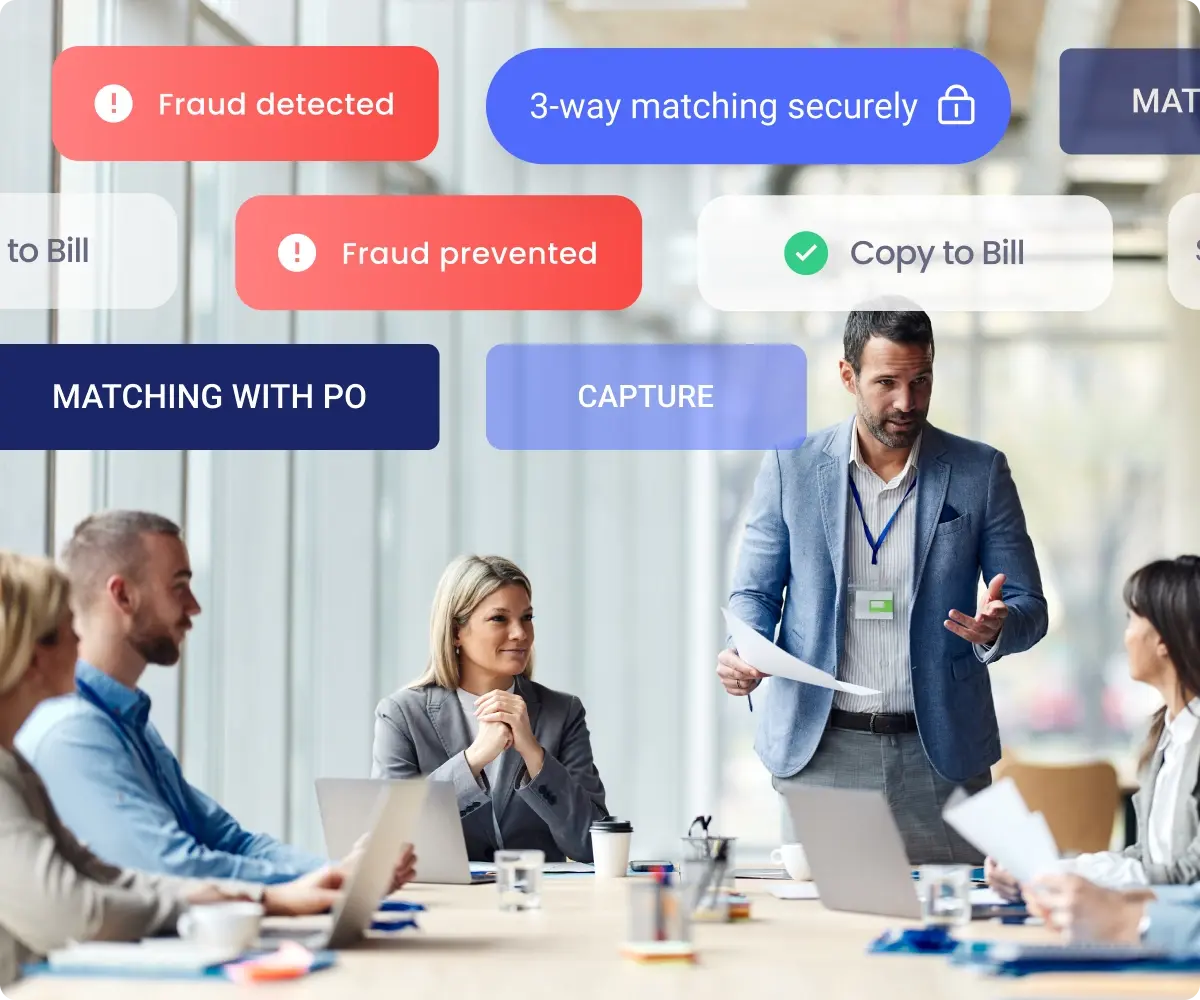
A contractor your company hires sends their monthly invoice: same hours, same project, same signature. The project manager forwards it to the finance team, and then you forward it to the director for approval. Two hours later, a reply comes back saying: "Approved."

The same week of work was already invoiced and paid three weeks ago, but nothing is cross-checking this invoice against the last one. And once you've approved it, a line on the invoice could be edited in Xero, with nothing flagging that what gets paid no longer matches what you signed off. Eventually, when the budget overrun shows up in your management accounts, confirming what was approved means trawling through email threads one at a time, matching each to what was actually paid.

You have to fix these issues case by case, week by week, and before you can work out why they keep happening, they've already eaten hours out of your day - time that could have been spent on actual finance work.


Why these problems go undetected

Like the majority of consulting and creative agencies, your team is sending out a high volume of contractor invoices through email each month for approval. The approvers, however, are making decisions with no system enforcing the checks they can’t see (no duplicate flag, no live budget impact, etc). Therefore, the risk that was there last month will still be there next month, and the month after that.

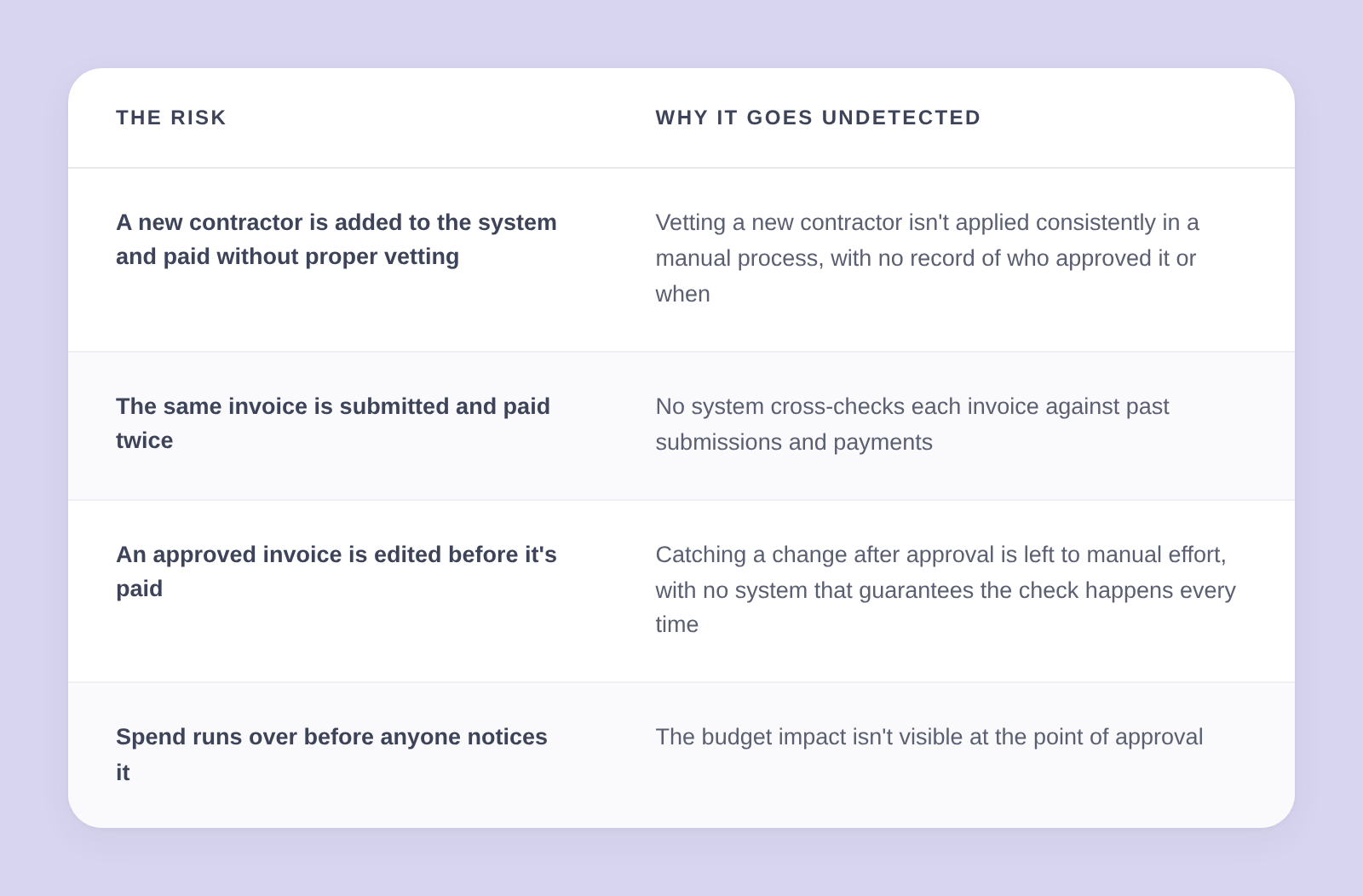
Here’s the breakdown of the risks in the manual process
undefined-Jun-08-2026-09-58-49-8919-AM

A manual approval process was never built to verify anything; it only records the decision. And this isn’t because your team is careless; it’s because there's no structural system designed to catch these blind spots.

What approving without a real check costs

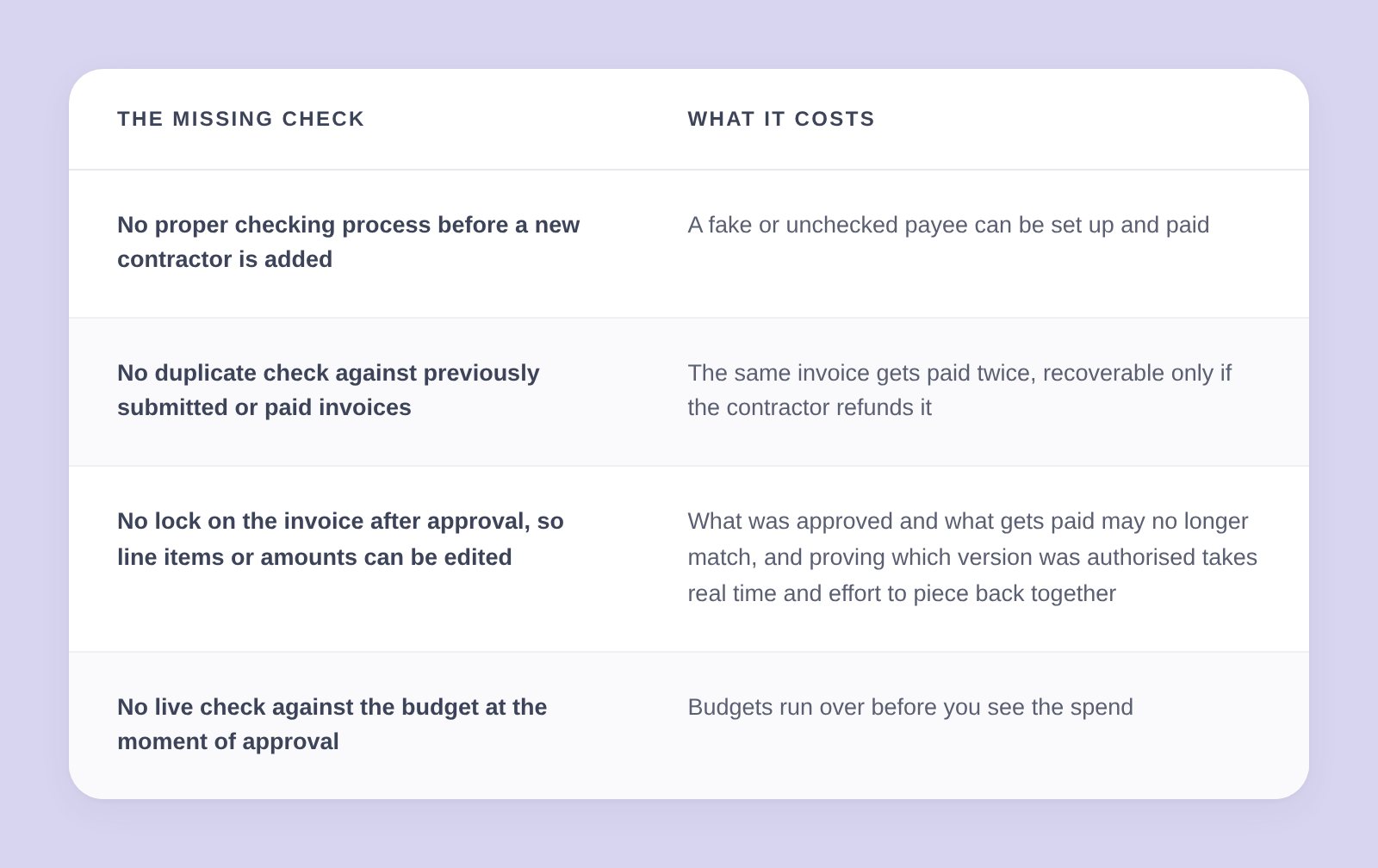
For agencies and consulting firms with heavy contractor spend, every invoice approved without a check is a chance for something to slip through. The more invoices that go unchecked, the higher the chance one of them could cost you.
what-it-costs-table-png

Most importantly, the cost isn't only the money and time; it's the trust your finance team loses with the contractor, auditors and the board.

What catching the risks in time looks like

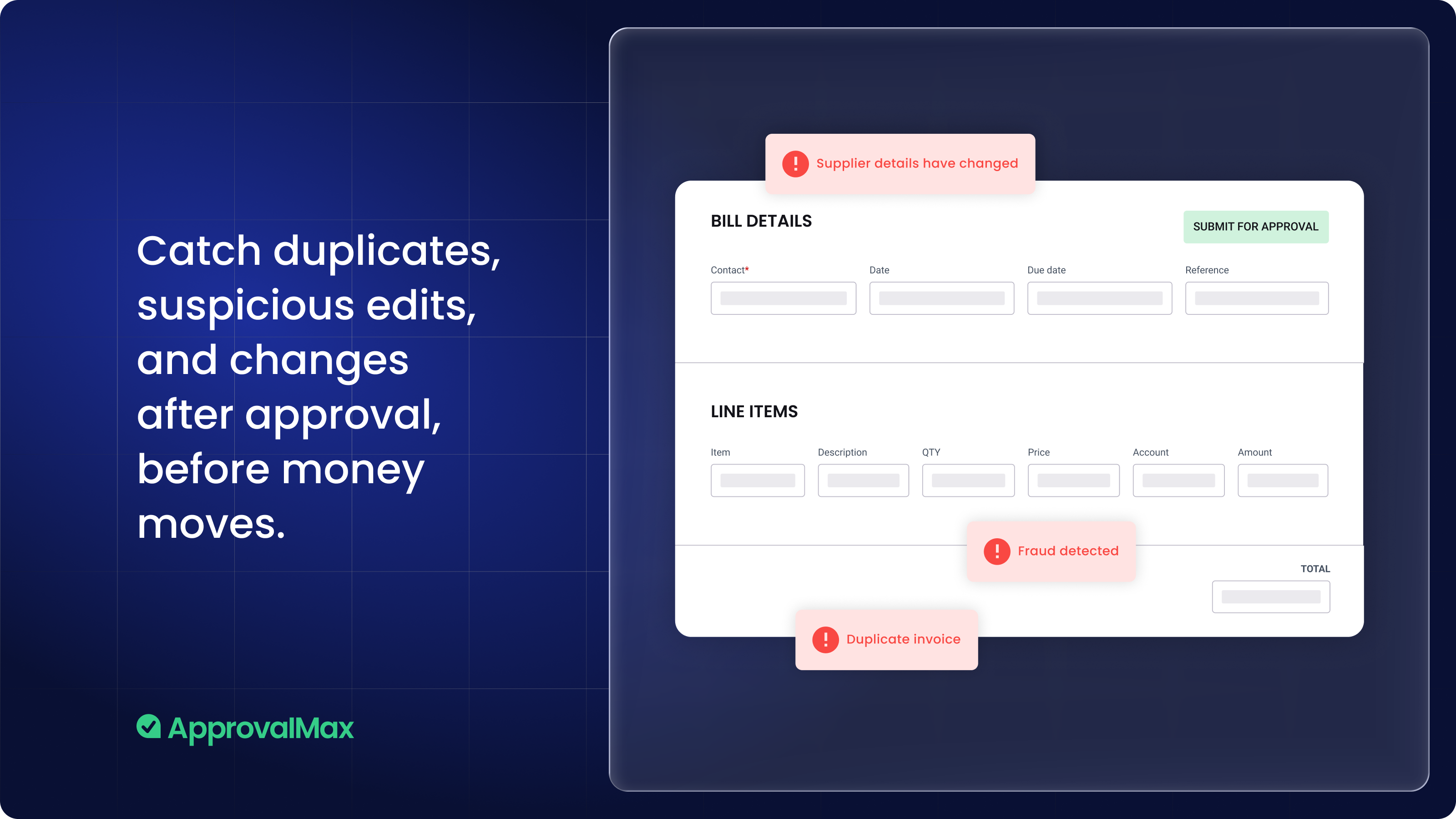
What does the process look like with a system in place to catch these anomalies? The difference isn't that your team works harder. It's that the checks run on their own, so your finance team's time goes to the work that actually needs their judgment, not to chase and double-check every invoice. These checks should be built into the process, working on every contractor invoice before a decision is made.

This is what it looks like when the process carries the weight your team used to carry alone:

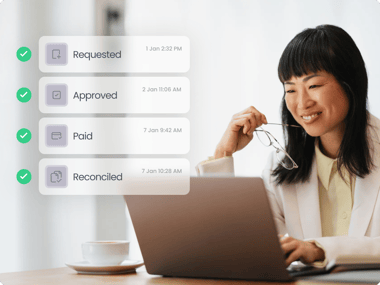
All the checks above leave a record, so when an auditor asks how a payment was authorised, the answer is a single timestamped record, not an email archaeology project.

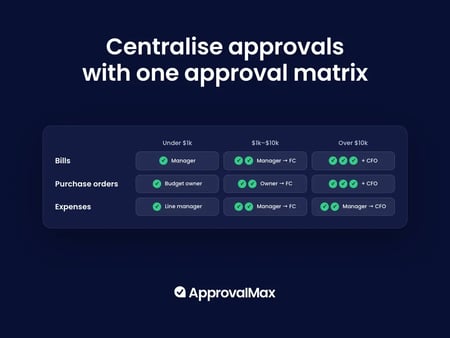
To acquire this efficient process, more vigilance is not the solution, but a system doing the catching on every invoice, every time, is the answer. An effective system would sit between the invoice and the payment, apply the policies you set once, and flag what doesn't fit before the approver ever sees it. That’s exactly the mechanism ApprovalMax provides.

How ApprovalMax catches risk before money moves

Picture a contractor invoice arriving, only this time, the checks run automatically by ApprovalMax:

1

A new contractor is vetted before they can be added to the system. 

No contractor is added to your ledger or paid until the right people have signed off through our Vendor Approval workflowNo one can both create and approve a payee with our Segregation of Duties capability.

2

Duplicate invoices stop slipping through.

Every invoice is screened against what's already been submitted and paid, so a duplicate is caught before it reaches the payment run.

3

A change after approval doesn't go unnoticed.

If a monitored field, such as the contractor details or amount, is edited in Xero after approval, you will be flagged immediately.

4

Budget check before the spend, not after.

Budget check at the moment of approval, so an overspend is caught at the decision itself, before the money moves.

5

An audit trail that records every check.

Every flag raised, every policy applied, every approval is captured automatically and attached to the invoice in Xero. The audit trail exists before anyone asks for it.


Fraud detect


With ApprovalMax, the checks that used to live in someone's memory live in the system. Every contractor payment you’ll process with confidence, as they have already passed every test.

approvalmax blog avatar

Written by

ApprovalMax

Product expert

ApprovalMax is a trusted Xero, Quickbooks and NetSuite partner who helps finance teams implement structured approval workflows and financial controls across the entire Money Out lifecycle - not just at the point of payment. 
LinkedIn