Tired of being the ‘Invoice Police’? How finance teams should run approvals day-to-day
-
Why it matters: For many finance teams, approval workflows haven't been designed so much as inherited - a patchwork of email chains, Slack messages, and manual chasing that quietly consumes hours of skilled time every week and creates real governance risk.
-
The bottom line: When approval processes run on clearly defined rules rather than human persistence, finance teams spend less time chasing paperwork and more time adding value to the business.
Ask a Finance Manager or Financial Controller to describe their week, and a familiar pattern tends to emerge - not the strategic oversight the role promises, but a steady drain of time spent chasing approvals, following up on outstanding sign-offs, and nudging budget holders who have let invoices sit unanswered.
It's a pattern that comes up repeatedly in our conversations with finance teams, and one they tend to describe in the same terms: feeling like the Invoice Police.
So how did it get like this? And more importantly, what does a better process actually look like?
Why finance teams end up playing "Invoice Police"
The Invoice Police problem doesn't happen because people are careless. It happens because most approval processes were never really designed - in the majority of businesses, they just evolve. Whether it’s a new supplier relationship, or an email chain that becomes the de facto system - before long, the entire financial control framework for a growing business is held together by a combination of inboxes, shared knowledge, and a dogged finance team.
This is what's sometimes called "approval by exception" - where the only thing that triggers action is someone (usually the financial controller) noticing something has slipped through the cracks and intervening manually. For a very small-scale business, it works until the business grows. Then it doesn't.
But there’s a deeper issue here, and it’s structural. When there's no defined workflow, no automatic routing, and no audit trail, the only way to enforce financial controls is through human persistence. And that human is almost always someone in finance.
The real cost (and it's not just time)
The obvious cost is hours. Finance professionals in SMEs frequently report spending three to five hours a week on approval chasing alone - across a year, that's weeks of capacity lost to admin that adds no analytical value whatsoever. (To find out more, read how KeepCup were previously taking three months a year on unnecessary chasing).
But the less visible costs are arguably worse.
From the calls we take, we know that there’s a genuine professional dignity issue at stake. People who trained in accounting, financial planning, or management reporting are being asked to function as administrative chasers, and over time that erodes job satisfaction in ways that don't show up on a spreadsheet.
As one financial controller we spoke to phrased it:
"I’ve spent fifteen years qualifying and building a career in strategic finance, but since we scaled to fifty projects, 70% of my week is spent being the invoice police. I’m literally chasing site managers down for a signature on a £500 supply order. It’s degrading to the role; I should be looking at our cash flow and margins, not playing digital debt collector with my own colleagues."
It also creates friction with the budget holders being chased - finance becomes seen as a blocker rather than a business partner, which affects how seriously financial input is taken in strategic conversations and ultimately undermines the function's influence across the organisation.
Then there is the risk dimension. When approvals are delayed, invoices get paid late, damaging supplier relationships and potentially attracting penalty charges.
Alternatively, when people grow frustrated with the process, invoices sometimes get paid without proper approval - a control failure that can have serious consequences at audit time. The Invoice Police problem, in other words, isn't just an annoyance. It's a genuine operational and governance risk.

So, what does a well-run approval process actually look like?
The good news is that this is a problem with a solution - removing the dependency on chasing co-workers entirely.
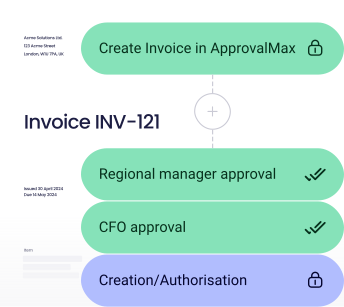
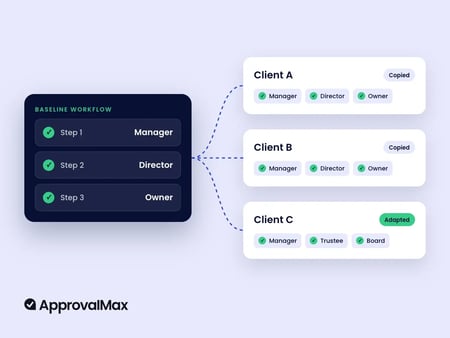
A well-designed approval workflow routes invoices automatically to the right approver based on pre-set rules - by supplier, cost category, value threshold, or department - without anyone in finance having to decide who to send it to. If an approver doesn't act within a set timeframe, the system follows up automatically. Note: not you - the system. This single change eliminates the vast majority of the chasing that finance teams currently handle manually.
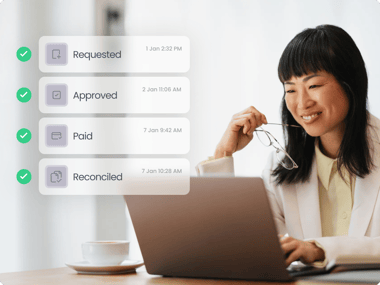
Every approval decision is also recorded by default: who approved it, when, and what they were shown at the time. With this system in place, there is no more reconstructing paper trails before year-end or scrambling to share evidence to an auditor. And for Xero and QuickBooks Online users in particular, integration matters enormously. Approved invoices should flow directly into the ledger without manual re-entry, with the approval layer and the accounting layer working seamlessly together.
A practical day-to-day approval playbook
If you're looking to move away from the Invoice Police model, the following framework is a practical place to start.
Map
Before automating anything, map your current approval touchpoints. Document which invoice types need approval, what the value thresholds are, and who the designated approvers are by department. Most finance managers carry this knowledge in their heads - getting it into a structured format is the essential first step.
Route
From there, define your escalation rules clearly. Decide what happens if an approver doesn't act within 24 or 48 hours and who it escalates to. This is the rule that replaces you chasing, so specificity matters.
Communicate
When rolling out the change, frame it to budget holders as a simplification rather than a tightening of controls. The message that approvals now take one notification and one click is a far easier sell than a new compliance framework.
Exceptions
Once the workflow is live, your daily focus should shift from sending reminders to reviewing exception reports - invoices that fall outside normal parameters, suppliers that don't match your approved vendor list, approvals that were overridden.
Review
Finally, build in a quarterly review to ensure the rules still reflect the business as it actually operates, accounting for new departments, supplier relationships, and value thresholds as they emerge.
A return to 'proper work' can start after the enforcing stops
The finance professionals who describe themselves as Invoice Police aren't doing it because they're bad at their jobs. They're doing it because the systems around them have pushed them into that role by default.
When they can move from enforcer to strategic partner, they're benefitting from having the infrastructure that handles the routine enforcement so they don't have to.
When approval workflows run themselves, they get their time back. When the audit trail builds itself, they get their credibility back. And when budget holders stop seeing the finance team as the people who nag them, they get their seat at the table back.
How ApprovalMax can help
Ready to stop being the Invoice Police? Book a demo with ApprovalMax and experience invoice approval software that integrates with your GL and removes the burden from your busy finance team.
Ready to Simplify Your Approval Process?
Set up a system of checks and balances for your financial operations.
Multi-step, multi-role approval workflows for financial documents.
Auto-generated audit reports for each approved item.
Get alerts for fraudulent activity and protect against it happening.
Leave printing in the past with fully digitised workflows.