How much of audit season do you actually spend on the audit? For most practices with nonprofit clients, a good part of it goes on getting the records into a state where the audit can begin.
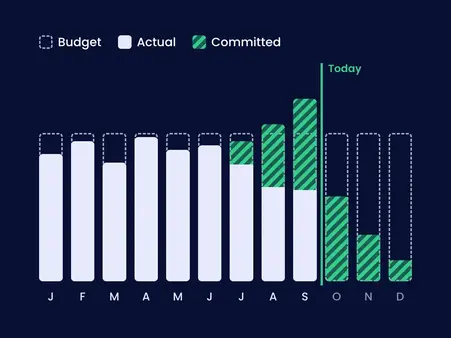
Nonprofit audit work follows fiscal year ends, and those fall into two main groups. Clients on a calendar year get fieldwork in roughly February to April. Clients with a June year end, common for anything tied to the school year, get fieldwork in roughly August to October. Each client brings its own auditor, and funder reporting runs alongside the audit rather than being covered by it.
Nonprofit clients also tend to have the thinnest finance functions in your book. One part-time bookkeeper, or a volunteer treasurer who took the role because nobody else would. When the auditor's request list arrives, a lot of it lands on you whether or not your engagement letter says it should.
This is about making the season repeatable so it takes hours per client rather than days, and so the clients who need remediation do not absorb the time the audits need.
Key takeaways
- Nonprofit audit season overruns on reconstruction, not audit work — rebuilding who approved what after the fact is where practices lose their margin on nonprofit clients.
- Standardizing one auditor request pack and reusing it across every nonprofit client is the single biggest time saving; a client given the list in advance produces about half of it themselves.
- Price bookkeeping remediation separately from audit support in the engagement letter — preparing schedules from clean records is audit support; making records clean enough to prepare from is a separate fee.
Why a nonprofit audit is a different job
A commercial audit is mostly about whether the numbers are right. A nonprofit audit asks that and then asks a second question, which is whether the organization was entitled to spend the money the way it did.
That pulls in things a commercial audit barely touches. Whether restricted funds were used for their stated purpose. Whether the board authorized what the bylaws say the board has to authorize. Whether the same person raised, approved and paid, which is the finding that comes up most often on small nonprofit engagements.
Auditors on these engagements test controls and not only balances. So the evidence they want is often about a decision rather than an amount, and decisions are the hardest thing to reconstruct after the fact.
Sort the book before the season starts
There are generally four groups, and they need different amounts of your time.
Clients with a mandated audit and an established auditor relationship. The work is predictable and the auditor's expectations are known. These should be the smoothest, and they are the ones to schedule first so the auditor's timetable does not slip into your busiest weeks.
Clients below the audit threshold who still have funder reporting. No statutory audit, but a grant agreement requiring a schedule of how the money was spent. Easy to underestimate, because the client thinks they have nothing due.
Clients whose finance function is one person or a volunteer. The technical work is small and the hand-holding is not. Budget for the conversations rather than treating them as an overrun.
Clients whose records will not support an audit this year. Uncategorized spend, no approval evidence, restricted funds tracked in a spreadsheet alongside the ledger. Say this early and price the remediation separately. Absorbing it is how practices lose money on nonprofit work.
Standardize the request pack
The auditor's list barely changes between clients or between years. Building one request pack and reusing it is the single biggest time saving available.
What tends to be on it:
- Evidence of who approved expenditure, at what amount, and when.
- Board and committee minutes covering any authorization the bylaws require.
- Schedules for each restricted fund, showing what came in, what was spent, and what remains.
- The basis for allocating shared costs such as payroll, rent and insurance across funds and programs.
- Related party disclosures, including board members' own organizations.
- Payroll records supporting any allocation of staff time to grant-funded work.
Send the pack to every client in the same form, well before the auditor asks. A client who has been given the list in advance produces about half of it themselves, and that half is where your margin is.
One item on that list creates work nobody plans for. If the approval evidence lives in a system separate from the accounting file, the auditor needs a login to that system. Somebody has to create an account for a person outside the organization, agree what they are allowed to see, grant it for the length of fieldwork, and then remember to remove it afterwards. Firms are often reluctant to hand over that access at all, because the system holds more than the auditor asked to look at.
Where the approval is recorded on the transaction itself, inside the accounting system the auditor is already working in, none of that arises. The evidence is in front of them as part of the record rather than attached to it afterwards, so there is no account to set up and nothing left behind to revoke.
The part that costs the most time
Reconstructing approvals is where nonprofit engagements overrun.
Most clients have landed on the same manual workaround. Someone prints the approval email to PDF and attaches it to the invoice. Then the two get merged into a single file so the evidence and the document stay together. It works, provided somebody did it on every transaction and the merged file is still where they left it. When a few are missing, or nobody was doing it consistently to begin with, someone in your team spends an afternoon rebuilding the decision after the fact. Multiply that across a book and it is the difference between a profitable season and a break-even one.
Created at the time, or assembled at your hourly rate.
Approval evidence either gets created at the moment spend is authorized, as a by-product of the process, or it gets reconstructed afterwards — on your clock. Clients understand that framing because it puts a price on it.
It is worth being blunt with clients about the cause. Approval evidence either gets created at the time, as a by-product of how spend gets authorized, or it gets assembled afterwards at your hourly rate. Clients understand that framing better than a general appeal to good record keeping, because it puts a price on it.
Treasurers rotate. The person who agreed the approval arrangements two years ago may have left, and the arrangements themselves may never have been written down.
Two things worth getting documented while you have the board's attention during audit season. First, what the board actually has to authorize, quoted from the bylaws rather than from custom. Second, who holds approval authority and up to what amount, with a named substitute for periods when they are unavailable.
Both are quick to write and both remove questions the auditor would otherwise raise with you rather than with the client.
Be explicit about where audit support ends
The scope problem on these engagements is that audit support and bookkeeping remediation feel like the same work to the client and are very different work to you.
Draw the line in the engagement letter and refer to it during the season rather than after. Preparing schedules from clean records is audit support. Making records clean enough to prepare schedules from is a separate piece of work with its own fee. Clients accept this when it is stated up front and resist it when it appears on an invoice.
Set clients up so next season costs less
The clients who are cheap to serve are the ones whose systems record approvals as they happen. That is something you can influence.
A client with a proper approval process produces the audit evidence as a by-product. The fund is identified when the spend is requested, the approver is recorded, and the trail exists without anyone assembling it. Your preparation time drops, and the client stops calling you to ask what a payment from eleven months ago was for.
Recommending that is not a favor to a software vendor. It is the difference between a client you can serve at your quoted fee and one you cannot.
Earn CPE credit
Your nonprofit follows the rules. But can you prove it?
With Gregg Bossen CPA, on September 22, 2026, 2 p.m. ET / 11 a.m. PT. One hour of CPE credit. Covers which document requests keep coming back for more and what a complete answer looks like first time — plus why proving an approval happened is harder than proving a payment did, and how to separate duties when there are only two of you. Register and you get the checklist of what a nonprofit should have on file.
Register for the webinar









 Ask Perplexity