Every finance team says they have an approval process. The following usage data from ApprovalMax shows what that actually means in practice – and gives you something concrete to compare your own process against.
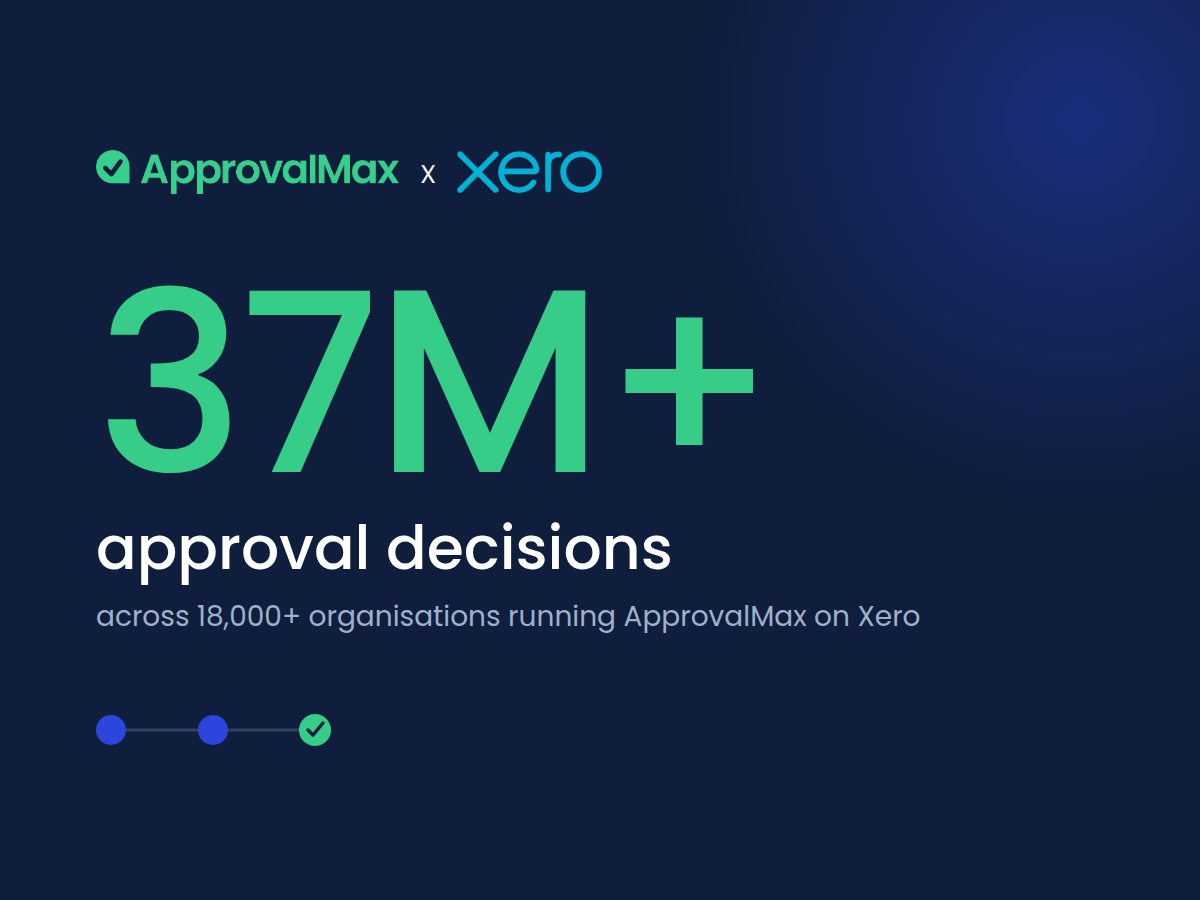
Over the past 12 months, 18,000+ organisations in 100+ countries processed more than 20 million bills, purchase orders and invoices through ApprovalMax on top of Xero. That’s over 37 million individual approval decisions – every one recorded, and resolved before the document reached the ledger.
Here are some standout data points that can help you check your own process against them.
Key takeaways
- Over 70% of organisations running spend through ApprovalMax on Xero use multi-step approval — averaging 2.4 sign-offs per workflow — because a single approver is a formality, not a control.
- Nearly 85% of workflows use conditional routing that changes the approval path automatically by amount, supplier, account or tracking category, turning a written policy into a rule that enforces itself.
- Across 18,000+ Xero businesses, all 37M+ approval decisions are resolved and logged before the document reaches the ledger — a complete audit trail of who approved what, when and why.
What do approval workflows look like in Xero businesses?
Approval workflows in Xero-based finance teams increasingly rely on multi-step sign-off and automated routing rather than a single signature. Across 18,000+ organisations and 37 million+ approval decisions over 12 months, more than 70% use multi-step approval (2.4 steps on average) and nearly 85% use conditional rules that route documents automatically by amount, supplier, account or tracking category. The most effective setups resolve and log every document before it reaches the ledger — making approval a gate, not a record.
This data covers 12 months to July 2026, aggregated and anonymised across 18,000+ organisations using ApprovalMax with Xero:
- 20M+ bills, purchase orders and invoices approved
- 37M+ individual approval decisions
- Over 70% of organisations run multi-step approval (two or more people sign off in sequence before a document is finalised) – 2.4 steps on average
- Nearly 85% of workflows use conditional routing rules (the approval path changes automatically based on amount, supplier, account or tracking category)
- Customers in 100+ countries rated 4.8 stars on the Xero App Store
37M+
individual approval decisions across 18,000+ Xero businesses (12 months to July 2026)
More than 20 million bills, purchase orders and invoices — every decision recorded and resolved before the document reached the ledger.
While the data above tells us the widespread usage of ApprovalMax, there’s a story to be told about the financial workflows, processes and protocols in businesses across the world.
Approval is rarely a single signature
From the data, we can see that over 70% of organisations run multi-step approval, averaging 2.4 steps per workflow. A typical pattern for this would be: the budget holder confirms the spend is legitimate, finance confirms the coding, and a director signs off above a threshold.
The logic is simple: one person saying yes isn’t really a control – it’s a formality. A control needs an independent check: someone other than the requester confirming the spend is valid. When a single approver waves everything through (or approves their own purchases), there’s no second set of eyes to catch an error, a duplicate, or a fraudulent invoice. Multi-step approval is what separates “we check our invoices” from segregation of duties an auditor will accept.
Benchmark yourself: if every document in your business is approved by one person – or worse, by the same person who created it – you’re behind how most businesses at this scale operate.
70%+
of organisations run multi-step approval
Two or more people sign off in sequence before a document is finalised — 2.4 steps on average. One approver is a formality; an independent second check is a control.
Policies on paper vs. rules that enforce themselves
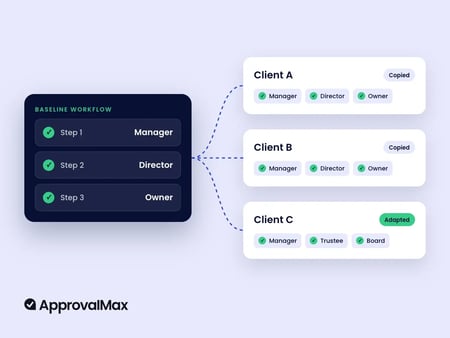
Nearly 85% of workflows use conditional rules. This means that documents route automatically by amount, supplier, account or tracking category: a £200 stationery order takes a short path, a £20,000 contractor invoice goes through additional scrutiny – without anyone deciding case by case.
85%
of workflows use conditional routing rules
The approval path changes automatically by amount, supplier, account or tracking category — the policy enforces itself, so following it isn’t optional and chasing it isn’t anyone’s job.
Most companies have an approval policy in a document somewhere. The data shows what mature finance teams do differently: they turn the policy into routing rules, so following it isn’t optional and chasing it isn’t anyone’s job.
“Instead of relying on email chains and manual follow-ups, invoices, bills, and purchase orders are automatically routed to the right managers. Spending is properly authorized before it reaches Xero.”
— Michelle Soekoe, Finance Manager, The DaVinci Institute
Control extends beyond the finance team
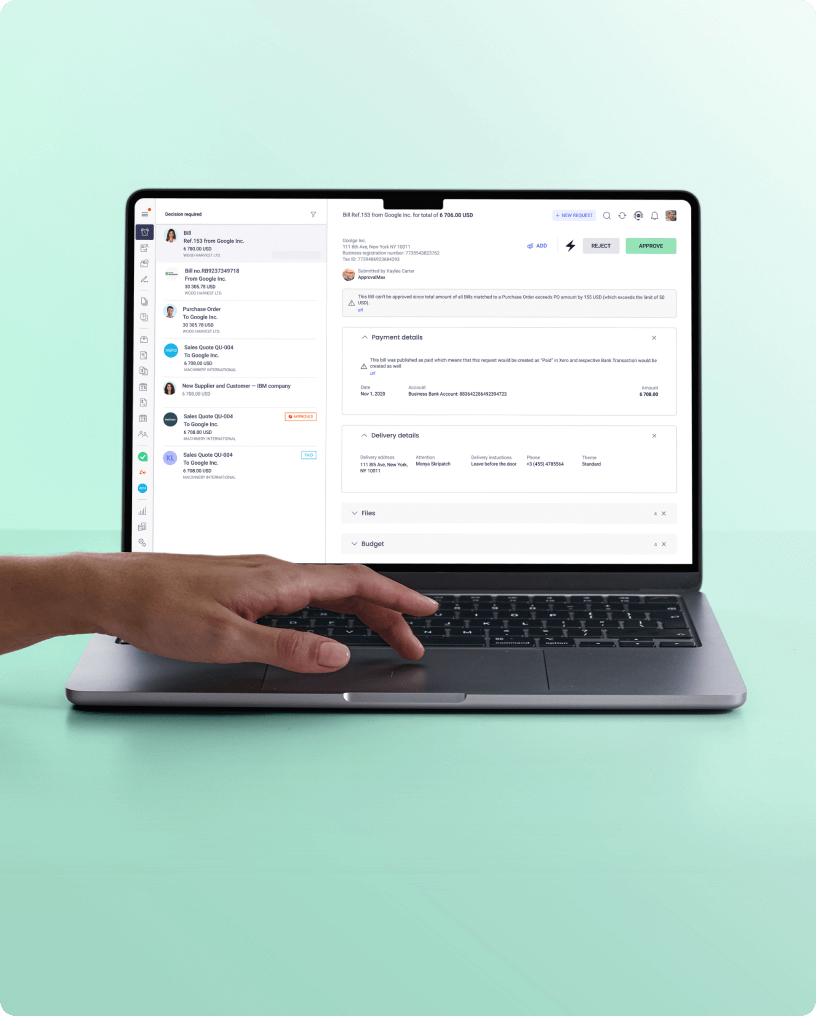
Approval increasingly happens where the knowledge is, not where the licence is. Budget holders and department leads approve spend without needing access to Xero itself – they see the document, the history and the budget context, decide, and move on.
“Exactly what Xero should have out of the box … the integration with Xero is so tight and efficient it’s like it’s a built-in module.”
— Ross McGregor, Finance Lead, Tektology
The 3-question approval check
You shouldn’t need an audit to know where you stand. Three questions:
1. Does anything reach Xero unapproved? Across these 18,000+ businesses, documents are resolved before they touch the ledger – the approval isn’t a record of what happened, it’s a gate.
2. Would a £500 and a £50,000 invoice follow different paths – automatically? If routing depends on someone remembering the policy, you have a policy, not a control.
3. Could you hand your auditor a complete ApprovalMax on top of Xero in minutes? Every one of those 37 million decisions is logged: who approved what, when, and on what basis.
If any answer is no, the fix is smaller than it sounds. Most teams build their first workflow in an afternoon.
See how you compare
Start a ApprovalMax on top of Xero, connect your Xero organisation, and have your first approval workflow live today – approvers don’t need access to Xero to use it.
Free trial
See how ApprovalMax works with Xero
No credit card required. Your first approval workflow can be live today — approvers don’t need a Xero licence.
Start free trialBook a demo
Methodology: figures are aggregated, anonymised production data covering the 12 months to July 2026 across organisations using ApprovalMax with Xero. Workflow metrics cover bill and purchase order workflows on current workflow versions.







 Ask Perplexity