Are we reaching some kind of saturation point with AI in tech?
I feel like it has, but not because the technology has peaked. We have reached peak AI hype, and the market is finally suffering from fatigue. The real question is no longer what this type of tech can do, but where it actually drives measurable value. And I feel that a lot of what's on the market wouldn't get anywhere near that bar. When my algorithm is serving me adverts for toothbrushes with integrated artificial intelligence, it definitely feels like we’ve jumped the shark.
And nothing is more contentious right now than AI in finance software. Many new features released in the market appear to be at best, superfluous, and at worst, just plain ill-thought out - the kind of updates it's hard to imagine anyone asking for, added simply to stay competitive and relevant in a fast-moving industry.
But why does this matter more in finance than in most other areas? The fundamental problem is that AI lacks two values that financial professionals must embody: reliability and accountability. Whether a number is right, and who answers for it if it isn't. Yes, AI can probably draft a VAT return quite well. But it cannot be the one who signs it. When a return or a set of accounts is filed, a named person stands behind it, and a year later, that has to hold up. If anything goes badly wrong, intelligent software can't get fired or lose a client. Unlike a human being, it has no skin in the game.
Full disclosure, before I continue: I'm the CFO of a company that has just built AI into its product. So the coming together of these two worlds is very front of mind for me right now.
I was also in the room where we set the limits - we knew before we wrote a line of code what we would and wouldn't do. For example, we knew we didn't want the software to approve anything in ApprovalMax. And nothing would be flagged that we couldn't explain. They were the conditions we started from - we knew if we were to introduce this type of tech to our software, it needed to be done with a considerable amount of thought, planning, and restraint. To focus not on trends, but on the user experience of our customers.
Which brings me to the question I think matters. When it comes to finance and accounting, where should the finance professional end and AI begin?
Key takeaways
- AI in finance software often fails on the two things the profession runs on: reliability and accountability. Software can draft a VAT return, but a named person still signs it and answers for it a year later.
- Most vendors are automating the decision itself, which quietly moves risk onto the approver whose name goes on the payment. Finance teams are asking for the opposite: a better view of their own data, with the decision left where it is.
- ApprovalMax's Approval Intelligence reads a supplier's history and flags when a bill doesn't fit, but it cannot approve, reject, or write anything into your records. It flags, you decide.
What we've said about AI in the past
In the summer I was asked a question on a webinar. If AI runs the numbers, what is the human still for? I said that AI in finance should be an exoskeleton, not a robot.
An exoskeleton doesn't choose where you go. It carries the weight so you can go further. The person inside is still the one deciding. A robot is essentially a replacement for a human being, but possesses none of the things required to make sound financial decisions: good judgement, ethics, and liability.
That's why we believe it is essential that a human remains at the helm of every important decision in finance.
What the market is selling
So far, I'm seeing a lot of vendors fast-tracking AI developments in their product, seemingly with little thought of how this type of tech impacts their users.
Most of the market feels like it is pushing that line as far as it will go. The promise of a smaller team. Fewer people involved, less manual work, more of the process running unwatched.
It's sold as "efficiency". But when a payment goes out that shouldn't have, who answers for it? It's still the person who approved it. What's changed is how much of the process they were removed from before their name went on it. That's not efficiency being transferred to the finance team - it's risk.
Finance teams are actually asking for the opposite. Every conversation we've had around this topic told us the same thing. They want AI to give them a better view of their own data and leave the decision where it is. Not less involvement in the work, just clearer accountability for it.
When a vendor gets that wrong in public, the profession says so quickly. I've watched this happen more than once in accounting software. When an ad boasts about AI software replacing accountants, the backlash is instant and wide-reaching. It's clear that companies need to practice a great deal of circumspection when talking about this type of technology with their customers.
Where AI could support ApprovalMax
Which brings us onto ApprovalMax and AI. While others in the market are automating the decision, our goal was to improve the judgment behind it, for the person making that call. So we began by asking: what does approving a bill look like?
For it to be paid properly, it requires a good deal of scrutiny. Is this amount normal for this supplier? Does the timing fit? Is the cost coded the way it was last time? Has this supplier appeared before? All of that is available if you go and look. But, it's in another system, a few clicks away. Most people tell me they check properly if there's time, or rely on memory when there isn't. It's not difficult to see how a lapse in finance protocol like this can open up opportunities for errors and fraud.
What we've built, and what it leaves alone
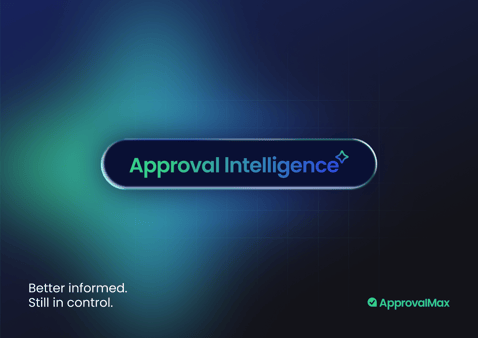
So, at the end of September, ApprovalMax introduces its new AI capability: Approval Intelligence.
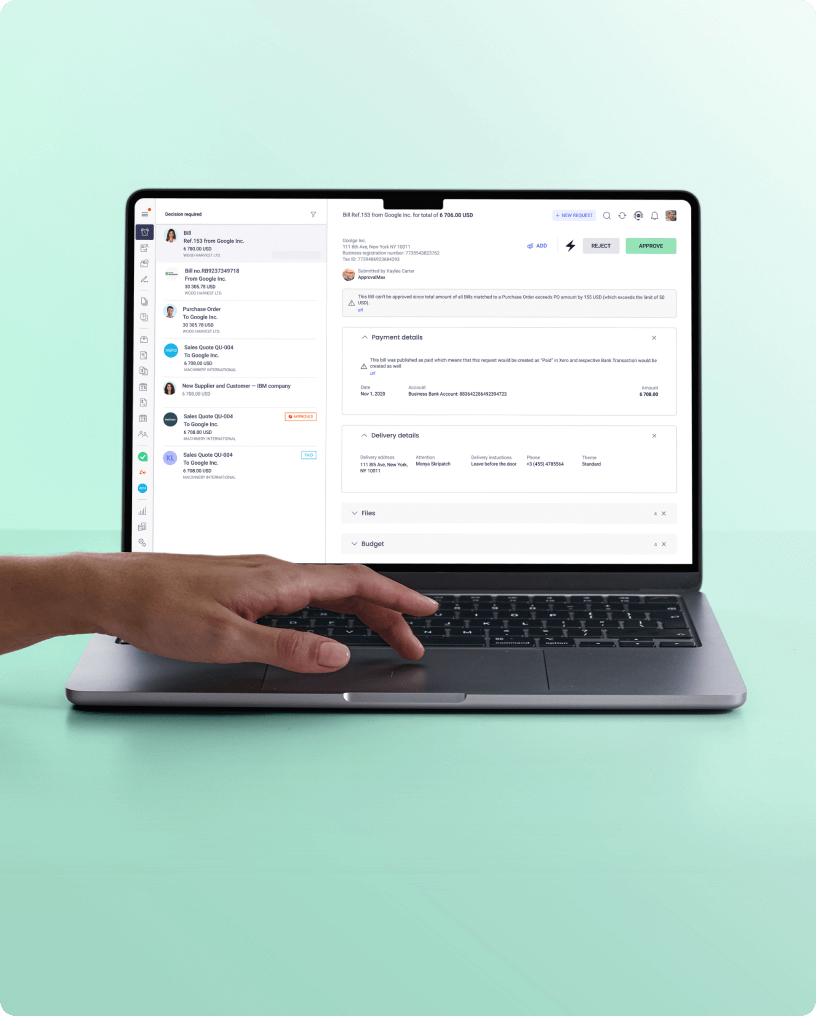
This does the looking before the approver arrives. It reads the supplier's history and tells you when a bill doesn't fit it. Is the amount what they usually charge? Have they sent more bills than usual? Have you paid them before at all?
Your rules, thresholds and approval chains stay as they are. Nobody needs to work differently. You and your finance team are still in charge.
Approval Intelligence cannot approve or reject anything. That stays with the person responsible. It writes nothing into your records. It reads what's there and produces observations, not entries. There is no output for anyone to tidy up, because nothing has been changed. It flags, you decide.
It flags, you decide.
Approval Intelligence reads what's already there and produces observations, not entries. It cannot approve or reject anything, and it writes nothing into your records.
Because we know our customers want to retain ultimate oversight and not surrender responsibilities to AI. Which is why our position is this: "Better informed, still in control."
This new addition to the product will prove most useful for those working in accounts day to day. A new approver has none of the history in their head. But this capability gives them the same view as a person who has been there for years.
Every approval requires a layer of checking, but it's now done before you look. The decision is still yours, but what changes is how much you know when you make it.
This is the part I'd want if I were doing the approving. Less of the retrieving, the cross-checking and the opening of other systems, so that more of the time goes on the judgement you were hired for.
So unlike those ads for those intelligent toothbrushes I keep seeing, ApprovalMax's Approval Intelligence actually offers a solution to a real problem for our customers. With it, finance teams can easily see what's wrong with a bill before they approve it, not after it's been paid.
So they become better informed, but still in control.
Better informed, still in control
See ApprovalMax in action
Approval workflows and Approval Intelligence for Xero, QuickBooks Online, and NetSuite.
Start free trial Book a demo







 Ask Perplexity