Paying subcontractors by check is still normal in construction. Many subs ask for checks, and paying by check is how many offices have always done it. But checks are the payment method most targeted by fraud. In the AFP’s 2026 Payments Fraud and Control Survey, 58% of US organizations reported check fraud in 2025, more than any other type of payment.
If you still pay subs by check, you can cut the risk with positive pay from your bank, tighter control over who writes and sends checks, and a second approval before any payment goes out.
Moving regular subcontractors to ACH removes the risk of stolen and washed checks. It brings a different risk, though: fraudsters asking you to change a sub's bank details. This guide covers both, and how to switch without upsetting the subs you rely on.
Key facts
- 58% of US organizations reported check fraud in 2025, making checks the most targeted payment method (AFP 2026 Payments Fraud and Control Survey).
- 72% of organizations that use checks plan to keep using them (AFP 2026).
- 74% of US organizations were affected by business email compromise in 2025. That's when a fraudster poses as a supplier or colleague by email, often to get bank details changed (AFP 2026).
- Banks filed more than 680,000 suspicious activity reports about check fraud in 2022, nearly double the 350,000 filed in 2021 (FinCEN).
- About 76% of subcontractors are usually or always paid by paper check (Rabbet, 2023 Construction Payments Report, as reported by Corpay).
- In about 1 in 3 construction businesses using ApprovalMax, at least one bill in the past year was approved only by the person who entered it (ApprovalMax data).
Why construction companies still pay subcontractors by check
Most construction finance teams know checks are slow. They keep using them for practical reasons.
- Subcontractors ask for them. Many smaller subs are set up to deposit checks and haven't given out bank details before.
- Checks fit the way progress payments work. A sub hands over a lien waiver, which is a signed document giving up the right to file a lien for the amount paid, and receives a check in return.
- Joint checks. General contractors sometimes pay a sub and its supplier with one check made out to both, so the supplier is paid and can't file a lien. That's harder to do electronically.
- Habit. The office has always printed checks, and changing feels like extra work during a busy job.
None of these reasons is wrong. They do mean a lot of money leaves construction businesses as paper, and paper is easy to steal and change.
How check fraud happens
Check fraud comes from outside the business and from inside it. These are the most common types in construction.
Stolen and washed checks
A check is stolen from the mail, often from an outgoing mailbox. The fraudster uses chemicals to remove the ink, then writes in a new payee and a bigger amount. This is called check washing. The signature is still yours, so the check looks real to the bank. FinCEN, the US Treasury's financial crimes unit, issued an alert about a nationwide surge in check fraud linked to mail theft in 2023.
76%
of subcontractors are usually or always paid by check
Checks were the payment method most targeted by fraud, ahead of ACH debits and wire transfers. Source: Rabbet, 2023 Construction Payments Report, as reported by Corpay.
Counterfeit checks
Every check you send shows your bank account and routing numbers. A fraudster who gets hold of one check can print new checks on your account.
Altered or forged checks
The payee or amount is changed, or the signature is forged. This can happen to a check that never left the office.
Checks written by someone inside the business
Someone with access to the checkbook writes checks to a fake vendor, to themselves, or to cash. It's most likely when one person approves bills, writes checks and reconciles the bank account.
Duplicate payments
The same invoice is paid twice, for example once by check and again when the sub chases payment. This is usually a mistake, but it can be deliberate.
Warning signs of check fraud
Look out for these in your accounts payable and bank statements:
- A check clears that nobody in the office remembers writing
- The payee name on the cleared check image is different from the name you wrote
- A sub says they never received a check that has already cleared
- Gaps in check numbers, or voided checks that can't be found
- A check clears for more than the bill it paid
- Bank reconciliations that are late, or always done by the person who writes the checks
How to prevent check fraud if you still pay by check
Some subs will keep asking for checks. These steps make checks much harder to abuse.
- Turn on positive pay. This compares every check presented for payment with a list of checks you’ve issued. If a check doesn't match, the bank asks you before paying it. Ask for payee positive pay, which checks the payee name as well as the amount.
- Keep checks out of outgoing mailboxes. Hand them in at the post office counter, use tracked mail, or have subs collect them.
- Lock up blank checks and log every check number, including the ones you void.
- Limit who can sign. Keep the list of signers short, and don't let a signature stamp sit in an unlocked drawer.
- Approve the bill before the check is written. The project manager who knows the job confirms the work was done. Someone else writes and sends the check.
- Have someone who doesn't write checks reconcile the bank account, at least monthly and ideally weekly.
Step 5 matters most. Splitting approval from payment, known as segregation of duties, means a fake or inflated bill has to get past two people. In ApprovalMax data, about 1 in 3 construction businesses had at least one bill approved by the person who entered it, so no one else checked it. Read more about how fake invoices get paid in construction.
ACH vs check for paying subcontractors
ACH is an electronic bank transfer through the Automated Clearing House network, which most US businesses use for payroll. Real-time payments (RTP) are a newer electronic option that arrive within seconds. Here's how they compare with checks.
| |
Paper check |
ACH |
Real-time payment |
| How it's sent |
Printed and mailed, or handed over |
Electronically to the sub's bank account |
Electronically to the sub's bank account |
| How long it takes |
Days in the mail, then time to clear |
Usually one to three business days |
Within seconds, any day |
| What a fraudster can steal |
The check itself, plus your account and routing numbers printed on it |
Nothing in transit |
Nothing in transit |
| Main fraud risk |
Theft, washing and counterfeiting |
Fake requests to change a sub's bank details |
Fake requests to change bank details, and payments can't be recalled once sent |
| Best control |
Positive pay |
Call the sub back on a known number before changing details |
Approve every payment before it's sent |
Electronic payments remove the paper that check fraud depends on. They move the risk to one place: the bank details you hold for each sub.
The risk to watch with electronic payments: changed bank details
Once a sub is paid by ACH, a fraudster no longer needs to steal a check. They need you to send the next payment to their account. The usual approach is an email that looks like it's from the sub, saying they've changed banks.
74%
of US organizations were affected by business email compromise in 2025
Fraudsters pose as a supplier or colleague by email, often to get bank details changed before the next payment. Source: AFP 2026 Payments Fraud and Control Survey.
This happened to the City of Mobile, Alabama, in 2026. Someone posing as the contractor building the city’s new arena emailed from an address that looked almost identical to the real one. They asked the city to update the contractor’s bank details, and later to switch payments from wire to ACH. Two staff members checked the change by phone, but they called the number in the fraudster’s email. In October, $14.7 million meant for the contractor went to the fraudster’s account.
The fix is simple. Before you change any sub's bank details, call them on a phone number you already have on file. Never use the number in the email asking for the change. Then have a second person approve the change before the next payment goes out.
How to move subcontractors off checks
You don't need to switch everyone at once.
- Start with the subs you pay most often. They'll see the biggest benefit from faster payment, and so will your office.
- Collect bank details on a signed form, not in an email. Confirm them by calling a number you already have.
- Keep your lien waiver process. Collect waivers before you pay, exactly as you do with checks.
- Tell subs how you'll handle changes. Let them know in writing that you'll never change bank details based on an email alone, and that you'll always call to confirm.
- Keep checks for subs who insist, and protect those checks with positive pay.
How ApprovalMax helps construction businesses pay subcontractors
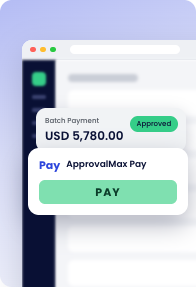
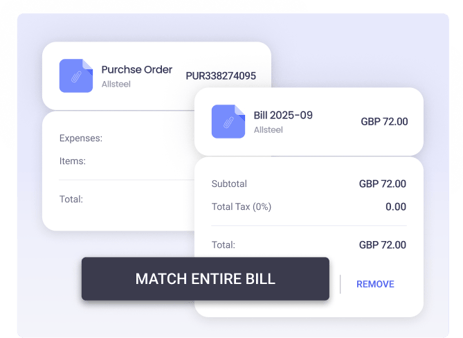
ApprovalMax Pay lets US businesses on QuickBooks Online approve and pay bills in one place, so approval and payment don't happen in separate systems. See where bill pay usually breaks when they do.
- Bills are approved by the right people before they can be paid.
- You can pay US vendors by ACH or real-time payments, one at a time or in batches.
- Role-based permissions separate the person who prepares a payment from the people who approve and release it. Each payer signs in with two-factor authentication.
- Payment batches have their own approval step, which can route by vendor and amount, so a large or unusual payment gets a second look.
- Every approval and payment is recorded in an audit trail.
- It works alongside your existing payment methods, so you can keep paying the subs who still want checks.
ApprovalMax won't make a business immune to fraud. Approving every payment before it leaves the business makes fraud much harder to get away with.
Free trial
Approve and pay subcontractors in one place
No credit card required. Works with QuickBooks Online.
Start free trialBook a demo
Frequently asked questions
Is it safe to pay subcontractors by check?
Paying subcontractors by check carries more fraud risk than electronic payment. In the AFP's 2026 survey, 58% of US organizations reported check fraud in 2025, more than any other payment method. If you pay by check, use positive pay from your bank, keep checks out of outgoing mailboxes, and make sure the person who approves a bill isn't the person who writes the check.
What is check washing?
Check washing is when a fraudster steals a check, usually from the mail, and uses chemicals to remove the ink. They then write in a new payee and amount. Because the original signature stays on the check, it can look genuine to a bank.
What is positive pay?
Positive pay is a bank service that compares each check presented for payment with a list of checks the business has issued. If the check number, amount or payee doesn't match, the bank flags it for the business to review before paying. Payee positive pay also checks the payee name.
Is ACH safer than paying by check?
ACH removes the main risks of checks, such as theft from the mail, check washing and counterfeiting. Its main risk is fraudsters asking a business to change a supplier's bank details. Businesses can manage that by confirming any change by phone, using a number they already have on file.
How do I get subcontractors to accept ACH?
Start with the subcontractors you pay most often, and explain that ACH gets them paid faster. Collect bank details on a signed form, confirm them by phone, and keep your usual lien waiver process. Offer checks with positive pay to any sub who still prefers them.
How do I stop someone from changing a subcontractor's bank details?
Only change bank details after calling the subcontractor on a phone number you already have on file. Don't use contact details from the email or letter asking for the change. Make sure a second person approves any change before the next payment is sent.
About the sources
AFP, 2026 Payments Fraud and Control Survey Report (survey of 465 US treasury professionals, January 2026). FinCEN, Alert on Nationwide Surge in Mail Theft-Related Check Fraud Schemes Targeting the U.S. Mail (February 2023). Rabbet, 2023 Construction Payments Report, as reported by Corpay. ApprovalMax data on bills approved between 1 October 2025 and 30 September 2026, as described in our construction fraud guide. NBC 15, Mayor: Multiple warning signs missed before Mobile’s $14.7 million loss (November 2026).




 Ask Perplexity