Ask most accountants where they add value to a client's budget and they'll point to the two ends: building it at the start of the year, and explaining the variance once the year is over. Both matter. But as more firms build out client advisory services, it's becoming clear the trust gets won somewhere else: in the ten or eleven months in between, when the budget is either holding or coming apart.
That middle stretch is where most firms are least involved, because the reports only show what happened after it happened. This guide covers what client advisory services are, where budgeting fits, and how to package budget monitoring as a service clients value all year.
Key takeaways
- Client advisory services (CAS) are the forward-looking work a firm does beyond compliance, and budgeting sits at the center of them because forecasts and KPIs are measured against it.
- A budget vs actual report only shows invoiced spend, so accountants who rely on it deliver bad news after the money has gone; approving spend before it is committed lets them prevent overspend instead.
- Budget monitoring works best as a defined monthly service: approval before spend, committed spend on each budget line, limits that match the budget, and a one-page monthly position for the client.
What are client advisory services, and where does budgeting fit?
Client advisory services (CAS) are the forward-looking work an accounting firm does for clients beyond compliance: helping them plan, track performance and make better financial decisions. Many firms offer them alongside day-to-day bookkeeping as client accounting and advisory services.
Common examples of client advisory services include:
- Budgeting and budget monitoring
- Cash flow forecasting
- KPI reporting and benchmarking
- Outsourced CFO or FD support
- Tax planning
Budgeting sits at the center of most of these, because forecasts, KPIs and cash plans are all measured against it. The demand is there too. In a CPA.com survey, 72% of small and mid-size businesses said they wanted a proactive approach to expense management, but only 34% of accounting firms were offering it.
72%
of small and mid-size businesses want a proactive approach to expense management (CPA.com)
Only 34% of accounting firms were offering it, which leaves a clear gap for firms that build budget monitoring into their client advisory services.
Why is setting the budget the easy part?
A budget is a plan, and a plan is only worth the discipline that follows it. Clients rarely struggle to agree a number in a planning meeting. They struggle to stay inside it once real spending starts and the assumptions behind the number begin to move.
So the budget you hand over in January is the easy part. The real work is everything that keeps the client inside it after they've stopped thinking about the meeting. That's also where most budgets go wrong, as we covered in what goes wrong when finance teams build next year's budget.
Why doesn't month-end budget vs actual reporting build trust?
A budget vs actual report compares what a client planned to spend with what has been recorded in their books. It's the standard way to check progress, and it has one built-in problem: it only shows spend that has already been invoiced.
So most accountants find out a client has gone over budget the same way the client does: at month-end, when the overspend is already in the accounts. By then the order has been placed, the invoice has arrived and the money has gone. We explain the timing gap in detail in why budget overspend shows up too late.
That puts you in an awkward spot. Every budget conversation becomes a conversation about something that has already happened. You're always delivering bad news late. It's accurate, it's diligent, and over time it teaches the client to associate you with the moment they find out they overspent.
Reporting an overspend doesn't stop the next one
A client doesn't thank the person who tells them they went over budget last month. They thank the person who stopped it happening.
How do you move from reporting variances to preventing them?
Budget variance analysis explains why spending differed from the plan. It's valuable, but it looks backward. The shift that changes the client relationship is to catch the overspend before the money leaves, rather than explain it afterward.
In practice that means three changes to how a client's spending works:
- Spend gets approved before it's committed, not after the invoice arrives.
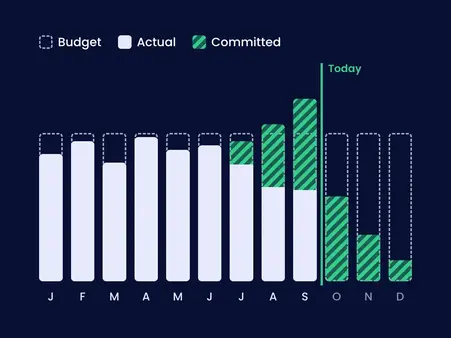
- The commitment shows against the budget line the moment it's approved, so the budget holder sees committed spend as well as invoiced spend.
- The person approving can see what's left in the budget while they decide.
None of this is new to an accountant. It's the same control you already understand, moved earlier in the process.
In practice: Meshed Group, a cloud advisory firm in South Africa, set this up for an agriculture client that was losing around 6 million rand a year to unauthorized spending. Once purchase orders were approved before anything was ordered, unauthorized spending dropped to zero. The approved purchase orders also gave the firm the data to forecast cash 30 to 60 days ahead. As managing director Juan Visser puts it: “Getting the contacts and dates of authorised purchase orders from ApprovalMax makes it easy for us to manually prepare cash flow forecasts in advance.”
What does budget advisory look like in a client's workflow?
It comes down to three controls you can set up once and leave running:
- Approval before spend. A purchase gets signed off before the order reaches the supplier, so nothing is committed that nobody agreed to.
- Committed spend on the budget line. Once something is approved, it sits against the budget as committed, so the client sees what they've promised, not just what's been billed.
- Limits that match the budget. Each approver's limit is set against the budget they draw on, and anything larger goes to a second person. That's already normal: more than 70% of businesses using ApprovalMax run multi-step approval, averaging 2.4 sign-offs per workflow (ApprovalMax usage data, 12 months to July 2026).
The Corner Office, an outsourced CFO firm in Canada, runs this setup for its mid-market construction and nonprofit clients on QuickBooks Online, including department-level budget enforcement. “We're essentially encoding their controls so they can't be overwritten by an urgent email request, or a moment of pressure,” says Trina Clairmont, Director of Business Transformation.
For a step-by-step guide to setting limits and cost centers at the start of the year, see how to set approval limits and cost centres for a new budget year. If the client runs Xero, you built your budget in Xero: now how do you enforce it? covers the platform side.
How to package budget monitoring as a client advisory service
Most firms that offer budgeting stop at building the budget. Monitoring it through the year is the part clients value most and the part fewest firms define. A simple structure:
| When | What you do | What the client gets |
|---|
| At budget sign-off | Agree which cost centers you'll monitor, who approves what, and the approval limits | A clear approval setup that matches the new budget |
| Once, at setup | Put the three controls in place in the client's system | Spend checked against budget before it's committed |
| Monthly | Review committed and actual spend by budget line, flag lines trending over, check open purchase orders | A one-page budget position: where they stand, the top risks, and any decisions needed |
| Quarterly | Revisit assumptions, reforecast where needed, adjust limits when the budget changes | A budget that still reflects the business |
Two things make this work as a service rather than a favor. First, define it as a fixed monthly offering, so it doesn't depend on the client remembering to ask. Second, keep the monthly output short. A one-page position the client actually reads beats a 40-page pack they don't.
Defining it as a service matters. Next Dimension Accounting, a 15-person firm in Sydney, used approval workflows to launch accounts payable as a formal service for its not-for-profit clients, and doubled its revenue in the two years that followed. Founder Brendan Lucas puts the risk point simply: “Putting this in place reduces risk as the client is the approver, based on their rules.”
If your clients run groups of companies, budgets also depend on costs landing in the right entity, which our guide to multi-entity accounting covers.
Why budgeting makes a CAS practice stickier
It's easy to see this as extra work done for the client's benefit. In practice, it's the work that keeps the client with you.
A client whose spend approvals run through a setup you designed is embedded with your firm, rather than shopping their annual accounts on price. The conversations move from compliance to advice, which is the direction most firms say they want to go. In the same CPA.com survey, 74% of firms offering spend management services said it improved their ability to attract and retain clients.
The Corner Office now uses ApprovalMax on every one of its nonprofit engagements. “We spend less time chasing approvals and reconciling who authorised what, which gives us more time to focus on the high value advisory work,” says Trina Clairmont.
It also scales. The same setup works across your client base, so you build it once and repeat it. And there's less firefighting at year-end, because much of that mess, from miscoded costs to surprise overspends to piecing together who approved what, comes from spending that was never captured properly at the start. Strong accounts payable controls fix most of it at the source.
How ApprovalMax supports client advisory services
ApprovalMax is how many firms put budget control in place across their clients rather than one at a time.
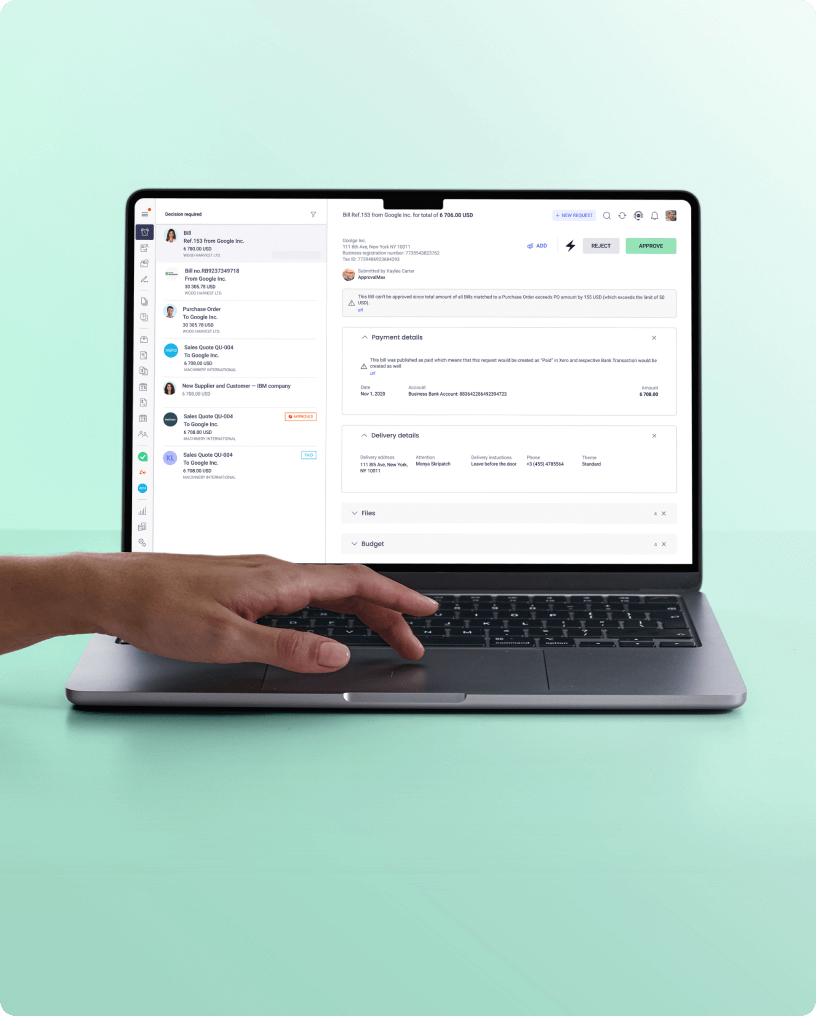
A client's bills and purchase orders are routed for approval by amount and cost center. With Budget Checking (on the Advanced plan), the approver sees how much of the budget is already used, including requests that have been approved but not yet invoiced, before they sign off. Limits sit against budgets rather than job titles, so when next year's numbers change, the thresholds change with them.
For firms looking for workflow software to support client advisory services, the value is consistency: the same approval setup on every client, with a full audit trail of who approved what and when. ApprovalMax works with Xero, QuickBooks Online and NetSuite, so it sits on top of the ledgers your clients already use. Learn about the ApprovalMax Partner Program.
The budget a client remembers is the one still intact in November, because something held it the whole way through. Being the firm that put that in place is what turns doing the accounts into being the advisor.
For accounting firms
See how ApprovalMax enforces approval controls automatically
Works with Xero, QuickBooks Online and NetSuite.
Start free trialBecome a partnerFrequently asked questions
What are examples of client advisory services?
Common client advisory services include budgeting and budget monitoring, cash flow forecasting, KPI reporting and benchmarking, outsourced CFO support and tax planning. Budgeting often anchors the rest, because forecasts and KPIs are measured against it.
What is the difference between client accounting services and client advisory services?
Client accounting services cover recording and processing: bookkeeping, reconciliations and payables. Client advisory services are forward-looking: planning, monitoring and advice. Many firms combine the two as client accounting and advisory services.
What is budget vs actual analysis?
Budget vs actual analysis compares what a business planned to spend with what has been recorded, line by line, to show where spending differs from the plan. It's most useful when it includes committed spend, meaning approved purchases that haven't been invoiced yet.
How can accountants help clients stick to a budget?
Accountants help clients stick to a budget by setting up approval before spend, showing committed spend against each budget line, matching approval limits to the budget, and reviewing the position monthly rather than only at year-end.
Other posts in this series








 Ask Perplexity