In a recent webinar, ApprovalMax's James Lin and Justin Campbell - between them, veterans of Fathom and a decade at Xero - sat down to work through one of the most common frustrations in growing finance teams: why budgets that get built carefully get ignored completely.

What follows is the core of what they covered (you can also watch the video of the webinar by scrolling down).

Here's a pattern that plays out in growing businesses more often than anyone likes to admit.

Someone spends weeks building the budget. They model growth rates, project headcount, debate each line item with department heads. It's thorough. It's detailed. Everyone signs off.

Then the financial year starts. And the budget gets filed somewhere. Nobody looks at it again until the variance report lands three months later — at which point one department has overspent by 30%, and the only conversation left to have is about belt-tightening.

James Lin, ApprovalMax's APAC lead, saw this play out repeatedly in his previous role at Fathom. Businesses would invest real time and energy in building the budget. The people actually spending the money had zero idea what was left.

The backwards-looking problem hiding inside Xero

Xero's built-in budget manager is genuinely useful. You can set budgets by account code and tracking category, run variance reports, compare actuals against plan.

The problem is that all of it tells you what already happened.

Justin Campbell spent ten years at Xero before joining ApprovalMax, and he puts the limitation plainly: at no point in the actual process of spending money does Xero ask anyone to check the budget. The variance report shows you the damage after it's done.

For a business handling a handful of transactions a month, that delay is probably fine. But once you're past a few hundred transactions, once you have multiple departments and tracking categories, that lag becomes genuinely dangerous.

You can build the budget in Xero. Enforcing it in real time is a different problem entirely.

What happens between "approved" and "paid"

The gap that causes the most trouble is the one between when someone decides to spend money and when that spend shows up in your accounting software.

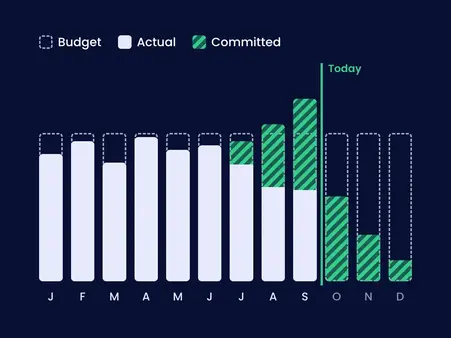
A bill doesn't appear in Xero's budget reports until it's been approved and posted. That means your variance report is always missing whatever is currently in motion - purchases being reviewed, invoices waiting on sign-off. Finance teams trying to control costs don't have a view of committed spend, only recorded spend.

The shift that changes this is moving budget checks to the point of approval. When an approver can see the remaining budget before signing off on a purchase order or a bill, the budget becomes something they actually use. A decision tool, rather than a report they read afterwards.

photo placeholder (13)-1
Watch the on-demand video below: 

How double-counting quietly wrecks your numbers

There's a subtler problem that trips up a lot of teams: double-counting.

If a purchase order commits $500 against the advertising budget and then a matching bill also hits for $500, you can end up showing $1,000 of spend against a $1,000 budget. Zero left. Even though it's the same transaction.

The fix is to mark the PO as billed when it's matched. The committed amount drops off, the bill takes its place, no duplication. Simple enough in principle. But if the matching step doesn't happen cleanly, approvers are making decisions based on inflated figures, and at that point the budget stops being something anyone trusts.

This is operational detail. Yes, it's unglamorous, but it's the difference between numbers people believe and numbers they quietly work around.

Turning a static document into a living control

The core argument from the session was this: Xero's budget tools are solid for reporting, but they only look backwards.

Adding forward-looking controls means checking the budget at the point of approval, introducing purchase orders so commitments are visible before bills arrive, and giving approvers a clear picture of what's been spent, what's in the pipeline, and what's left.

When that information is available at the moment someone is actually making a decision, the budget stops being something you review quarterly and starts being something you use every day.

That's what separates businesses that track budgets from ones that manage them.

The difference is when the check happens

Every business in this piece had a budget. The problem wasn't the planning - it was that the plan stopped mattering the moment the financial year started. It got filed, and the spending carried on without it.

This isn't a discipline problem. It's a timing problem. The budget exists. The spending decision happens. But nobody connects the two at the moment it counts - when someone is actually deciding whether to approve a bill or sign off a purchase order. By the time the variance report shows the damage, there's nothing left to do except explain it.

The fix is simpler than most businesses expect. ApprovalMax pulls your Xero budgets in and shows the remaining balance inside the approval itself. When a bill or PO arrives for sign-off, the approver sees what's been spent, what's already committed in open purchase orders, and what's actually left - before they make a decision, not after.

That one change does a lot of work. An approver who can see that a bill would push a department over its allocation can flag it, push back, or escalate. Without that number in front of them, they approve it in good faith and finance finds out at month-end.

The purchase order side matters too. Because POs go through an approval workflow before anything is committed, the budget balance reflects spend that's been approved but not yet billed. That's the number that actually tells you where you stand - not the posted figure in Xero, which is always missing whatever is currently in motion.

In practice it looks like this. A purchase order comes in for approval. The approver can see the department's remaining budget before they sign off - not last month's figure, but the live balance accounting for everything already committed. They approve it, query it, or escalate it. Either way they're making a decision with the right information rather than guessing.

By the time the bill arrives and gets matched to the PO, the committed amount adjusts automatically so nothing gets counted twice. Finance isn't chasing down discrepancies. Department heads aren't emailing to ask what's left in their budget. And the month-end variance report, when it runs, reflects decisions that were already made deliberately - not surprises that need explaining.

Register to attend