"It's that time of the year where we have so many holidays that the number of days to complete work is so few, so we find ourselves running around like a headless chicken at times."

— Accountant, New Zealand

Australian finance teams that finish EOFY on time treat the weeks before 30 June as the deadline, not the close itself. The five issues most often delaying close are unreconciled supplier files, undocumented approval gaps, aged payables, month-end processes that break under June volume, and audit evidence in formats the auditor can't accept. Each is a workflow problem that's cheaper to fix in May than reconstruct in July.

Ask a finance team what 30 June feels like and you'll get some version of that. The deadline doesn't move, but the working days around it do. King's Birthday weekend falls in June. School holidays begin. Approvers take leave, invoice volume rises, and the work that has to be done before close gets compressed into a shorter window than the team would choose. The question, by the third week, is usually whether the close will land on time.

Key takeaways
  • 01

    EOFY problems aren't EOFY problems — they're year-round workflow gaps that become visible at 30 June. The five fixable now: supplier master file, approval delegation, aged payables, process resilience, and audit evidence.

  • 02

    Benchmark data is consistent across studies: median month-end close takes 6.4 days, 50% of companies take more than 6 days, and 40% of Australian accountants describe their workload as heavy (Access Group 2024, Ledge 2025, Multiview).

  • 03

    The fix isn't more effort during close — it's a structured approval workflow that controls supplier changes, routes approvals automatically, logs every decision, and produces audit-ready exports without manual reconstruction.

It's not just a feeling. A 2024 study by The Access Group and Agile Market Intelligence found that 40% of Australian accountants describe their workload as heavy, and 26% feel overwhelmed. Over half name task volume as their primary source of stress, with compliance demands close behind. A separate 2023 survey from PPS Mutual found that overwork affects the health of more than 40% of accountants, with the EOFY peak a known contributor.

The benchmark data on close performance tells the same story from a different angle. A survey of 2,300 organisations found that the median time spent closing books is 6.4 days, with the bottom 25% needing 10 or more days. The Ledge 2025 Month-End Close Benchmark Survey found that 50% of companies still take more than six days to close, and the average team spends between 20 and 50 hours a month on the process, using three to five different systems to get through it. That's a normal month. EOFY isn't a normal month.

The pattern is consistent across the research: it isn't the reporting that slows teams down. It's the work that happens before reporting can begin. Reconciling fragmented data. Aligning systems. Correcting manual errors. By the time you're inside 30 June, those issues are no longer fixable. They're just visible.

This piece isn't a checklist for what to do during EOFY. It's five things to fix in the weeks before, while there's still time to address them properly.

40%
of Australian accountants describe their workload as heavy (Access Group, 2024)
Over half name task volume as their main source of stress — EOFY compresses that load into a shorter working window.

1. Reconcile your supplier master file

The supplier list is where small problems compound into audit findings. Duplicate vendors with slightly different names. Inactive suppliers that were never archived. Bank details updated by email six months ago and never verified. A "John Smith Consulting" that's actually three different people.

None of this is urgent in March. In late June, when you're trying to close the ledger and the auditor wants a supplier listing, it becomes urgent quickly. It's also the environment where supplier fraud typically lands: a busy AP clerk, an inbox full of invoices, and a request to update remittance details for the new financial year.

Pull the supplier file now. Archive what's dormant. Verify any bank detail change made in the last six months against a known phone number, not the email it came from. Lock down who can add or amend a supplier. Strong accounts payable controls close this gap year-round, not just before close.

2. Close the approval gaps you've been tolerating

One financial controller put it like this:

"When it's being done by email, some of the steps can be missed. And then it's kind of too late to catch up. There's a lot of communication happening and a lot of stuff gets missed. It doesn't necessarily always follow the right channels."

— Financial Controller, Australia

Most AP functions have gaps of this kind. The director who approves their own expenses because nobody wants to raise it. The site manager who was given delegation authority during a project and never had it removed. The "approved by email" workflow that lives in someone's Outlook folder. The threshold that was set in 2021 and hasn't moved since.

These gaps are survivable in a normal month. At EOFY they become the things you can't evidence. If an invoice was approved, who approved it, and did they have the authority to? If the answer involves a screenshot of a Teams message, the approval trail isn't going to hold up to review.

Review your delegation of authority matrix against what's actually happening in the system. Where they don't match, fix the system. Structured approval workflows remove the email-and-memory failure mode entirely.

6.4 days
median month-end close across 2,300 organisations (Multiview)
50% of companies still take more than six days to close in a normal month. EOFY isn't a normal month (Ledge, 2025).

3. Clear the aged payables that have been aged for a reason

Most AP teams have a small population of invoices sitting in dispute, query, or "waiting on the budget holder" for longer than anyone is comfortable admitting. Some are genuine disputes. Some are coding problems that nobody owned. Some are duplicates that were never resolved.

EOFY is when those become accrual decisions, and accrual decisions made under time pressure are how prior-period adjustments end up on the August agenda. Run an aged payables report now, while there's time to resolve items rather than just classify them. Anything older than 60 days needs an owner and a date. Anything older than 90 needs a decision.

4. Stress-test your month-end process for the volume spike

June isn't a normal month. Invoice volume rises, approvals are rushed, and the people who would normally catch errors are often the ones taking leave before the new financial year begins. If your AP process only works when everyone is at their desk and nothing is urgent, you'll find that out in the last week of June.

As one CFO described it:

"There are quite a few delays that can be picked up during the entire process, creating bottlenecks. You have to plan ahead so that you don't sit with those bottlenecks."

— CFO, Singapore

Look at where your process breaks under load. Are approvals routed to individuals or to roles? If your CFO is on leave on 28 June, does the invoice sit, or does it route? Can your AP team see what's stuck, or do they find out when a supplier calls?

The fixes are usually small: a delegation rule, a dashboard, a backup approver. They need to be in place before the volume hits.

5. Agree what "done" looks like with the auditor before you need to

"The auditors and the risk committee are all over us because of all of this. Even just having the program, being able to give them a report, saves us in any case."

— CFO, Australia

The biggest source of June pain in finance teams often isn't the work itself. It's discovering, two weeks before sign-off, that the auditor wants evidence in a format the team doesn't have. Approval trails exported a particular way. Supplier change logs going back twelve months. Segregation of duties evidenced at the system level rather than asserted in a policy document.

Have the conversation now. What will they ask for, in what format, over what period? If your current process can't produce it cleanly, that's a workflow fix, not a reporting one. A continuous audit trail turns this conversation from reconstruction into export. And it's cheaper to fix in May than to reconstruct in July.

The pattern

None of these are EOFY problems. They're year-round process problems that EOFY exposes. The teams that handle 30 June well are the ones that treat the weeks before it as the actual deadline. Once you're in the close itself, the work shifts from fixing to managing what's there.

The five items in this piece have something in common. Supplier data, approval authority, aged payables, process resilience, audit evidence. They all sit inside the same workflow: how an invoice moves from receipt to approval to payment, and what gets recorded along the way. When that workflow is manual, scattered across email, or held together by people remembering to do the right thing, EOFY is the point at which the cracks become visible. When it's structured, every one of those five problems becomes easier to solve, and most of them become easier to prevent.

That's the work to do now. Not the close itself, but the system the close depends on.

Where ApprovalMax fits

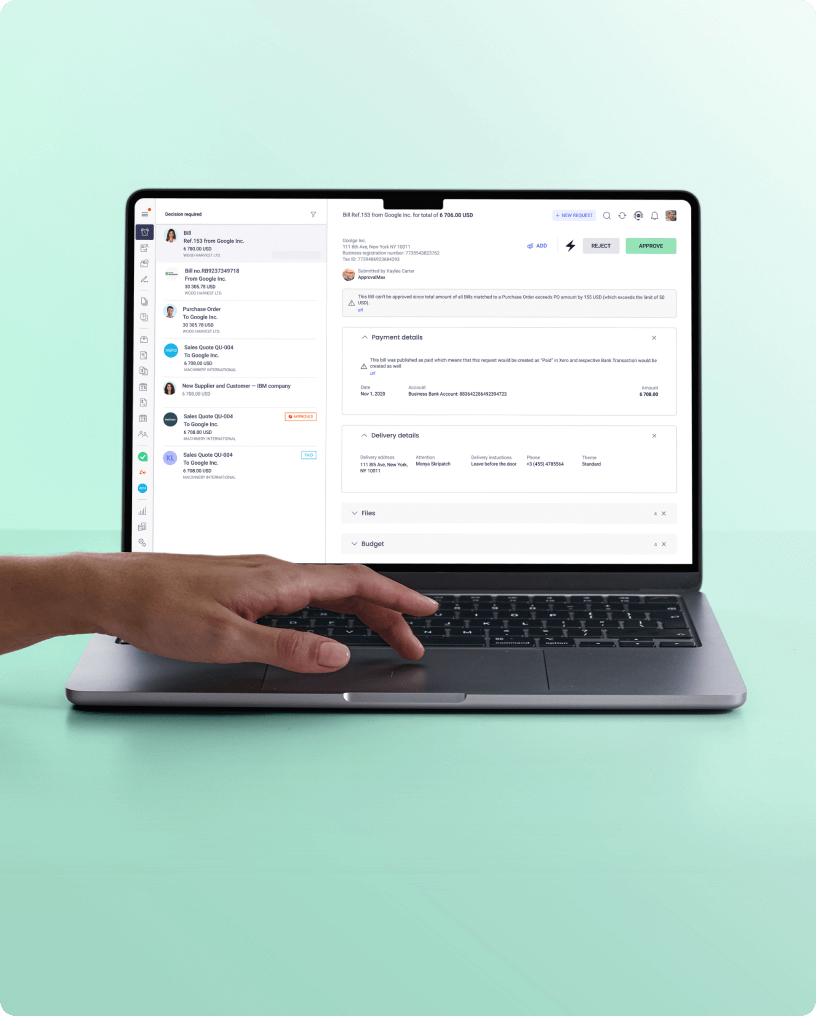
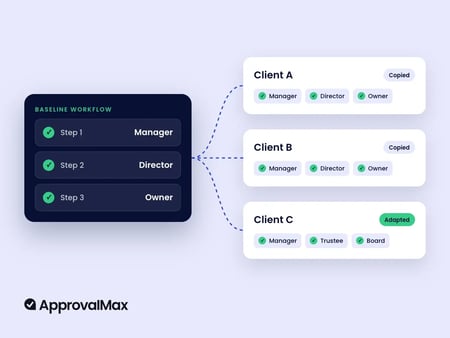
ApprovalMax sits between your accounting platform and your team, structuring the approval workflow that everything in this piece depends on. Suppliers can't be added or amended without controls. Approvals route automatically to the right person at the right threshold, with a backup in place when someone's on leave. Every decision is logged, time-stamped, and exportable in the format your auditor actually wants. Bank detail changes trigger a review rather than a payment.

It works natively with Xero and QuickBooks Online, deploys in days rather than months, and is built specifically for the finance teams running the AP function end to end.

If June is already shaping up to look like the year before, the time to change that is now. Book a 20-minute walkthrough and we'll show you what your EOFY could look like with the workflow in place. Or start a free trial and have it running before the month is out.

FREE TRIAL

See how ApprovalMax enforces approval controls automatically

No credit card required. Works with Xero, QuickBooks Online, and NetSuite.

approvalmax blog avatar

Written by

ApprovalMax

Product expert

ApprovalMax is a trusted Xero, Quickbooks and NetSuite partner who helps finance teams implement structured approval workflows and financial controls across the entire Money Out lifecycle - not just at the point of payment. 
LinkedIn