E-invoicing becomes mandatory in the UK for all VAT invoices between businesses, and to public bodies, from 1 April 2029. Invoices will be sent as structured data through the Peppol network, using certified providers called access points. For accountants, the change means a wave of client questions about software, invoice processes and approval controls, arriving in the same years as Making Tax Digital for Income Tax.
UK e-invoicing for accountants: the key facts
- Start date: 1 April 2029, for every VAT-registered business.
- What counts: structured invoice data sent between software systems. PDFs, Word files and scanned images do not count.
- How invoices travel: through the Peppol network, via a certified access point provider chosen by each business.
- Reporting to HMRC: none in real time at the start.
- Next milestone: the government's implementation roadmap, due at the Budget on 28 October 2026.
- Closest example abroad: Belgium, which made Peppol e-invoicing mandatory on 1 January 2026.
Why clients will bring e-invoicing to their accountant first
When UK e-invoicing becomes mandatory in April 2029, most small businesses will not ring HMRC or read the technical standards. They will ask their accountant. That is what happened in Belgium, which made e-invoicing compulsory in January 2026, and it is very likely to happen here.
This piece is for practices that advise clients on tax, bookkeeping and finance systems. It covers how e-invoicing fits into a practice calendar that already includes Making Tax Digital, what Belgian accountants and software providers learned in the past year, the questions clients are likely to ask, and why approval controls deserve a place in those conversations.
The government's implementation roadmap is due at the Budget on 28 October 2026. Some answers below will firm up after that. Most of the preparation work does not depend on it.
For the business-side view, including what Italy, France, Germany and Poland have learned so far, read our guide to the UK e-invoicing mandate.
How e-invoicing lands on top of Making Tax Digital for Income Tax
Practices are already dealing with a major change to how personal tax is reported. Making Tax Digital for Income Tax (MTD for Income Tax) requires sole traders and landlords to keep digital records and send HMRC quarterly updates. It is being phased in by income:
| From |
Who is brought in |
Number affected |
| 6 April 2026 |
Sole traders and landlords with qualifying income over £50,000 |
About 780,000 |
| 6 April 2027 |
Qualifying income over £30,000 |
A further 970,000 |
| 6 April 2028 |
Qualifying income over £20,000 |
About 900,000 more |
| 1 April 2029 |
All VAT invoices between businesses, and to public bodies, must be e-invoices |
Every VAT-registered business |
So e-invoicing arrives one year after the last MTD for Income Tax group joins. A practice that is onboarding clients to quarterly reporting through 2027 and 2028 will be doing that while the same clients, or their larger business clients, start asking about e-invoicing.
The two changes affect different people. MTD for Income Tax is about sole traders and landlords reporting their own income. E-invoicing applies to VAT invoices, so it reaches every VAT-registered business, including limited companies that MTD for Income Tax does not touch. But both push clients towards the same thing: keeping their records in software rather than on paper or in spreadsheets. A practice that plans the two together can avoid moving a client onto new software for MTD and then moving them again for e-invoicing.
What Peppol is and how it will work in the UK
Peppol is an international set of rules and a network for sending invoices and other business documents between different software systems. On 23 June 2026, HM Treasury and HMRC confirmed it as the core network for UK e-invoicing, using the Peppol BIS Billing 3.0 format and the European invoice standard EN 16931.
Peppol uses what is called a four-corner model. An invoice passes through four points:
- The supplier's accounting software creates the invoice.
- The supplier's access point checks it and sends it across the network.
- The customer's access point receives it.
- The customer's accounting software takes it in, ready to approve.
An access point is a certified provider connected to the network. For most small businesses, it will be their accounting software provider or a partner it works with. Each business on the network has a Peppol ID, an identifier that tells other access points where to deliver its invoices. In practice, a business usually gets its Peppol ID through its access point when it signs up, so clients will rarely need to apply for one themselves. The UK has not yet published which identifier, such as a VAT number or company number, it will use.
A practice does not need to become an access point to support clients. What it does need is to know which access points its clients' software uses and how each one is set up.
What Belgium's first year of e-invoicing showed about the accountant's role
Belgium is the closest match to what the UK is planning. Since 1 January 2026, every VAT-registered business in Belgium has had to send and receive structured e-invoices for sales to other businesses, through the Peppol network. Peppol is the same network the UK confirmed in June 2026. Invoices pass between businesses through their chosen software providers, and the tax authority does not approve each one.
The deadline was known two years ahead, and many businesses still left it late
Belgian businesses had roughly two years' notice. Even so, Robin Appeltants of Wolters Kluwer Belgium, whose team supplies small-business software, told Wolters Kluwer that many businesses waited until late 2025 and some expected another delay. Those that started six months to a year early had an easier time. Some late starters had invoices go unpaid, which hit their cash flow.
The government did not delay. It offered a tolerance period from 1 January to 31 March 2026, but only for businesses that could show they had taken reasonable and timely steps to comply. Since 1 April, fines of €1,500, €3,000 and €5,000 apply for a first, second and later offence. By December 2025, KPMG reported that more than half a million businesses had already adopted e-invoicing, with sign-ups speeding up from September 2025.
500,000+
Belgian businesses on e-invoicing by December 2025
KPMG reported that sign-ups sped up from September 2025, only months before the 1 January 2026 deadline.
Some businesses' invoice approval processes stopped working
Appeltants described one problem that will be familiar to anyone who has seen how small businesses handle bills. Some companies printed emailed PDF invoices and passed the paper around for checking and sign-off. When invoices started arriving as structured data through Peppol, there was often nothing to print, and the approval process stopped working.
His team also found that unusual arrangements were more common than expected. They planned for a few customers to need self-billing, where the buyer raises the invoice on the supplier's behalf. In the end, hundreds of customers needed it.
Belgium paid part of the cost, including advice
Belgium gave small businesses and the self-employed an increased tax deduction of 120% on subscription invoicing software for the 2024 to 2027 tax periods. Some Belgian providers report that advice from an accountant or bookkeeper on e-invoicing also qualifies. The government also published a list of more than 350 e-invoicing software providers to help businesses choose.
The UK has not announced any support of this kind. Whether the 28 October roadmap includes it is one of the things practices should look for.
Questions clients are likely to ask about UK e-invoicing, with plain answers
The answers below reflect what has been confirmed as of early October 2026. Expect some of them to change after the Budget.
"We already email our invoices. Aren't we doing e-invoicing?" Probably not. A PDF attached to an email does not count. An e-invoice is structured data that the customer's software can read without anyone retyping it. HMRC's own research found that some businesses were confused in the other direction too: a number said they did not use e-invoicing, then described processes that did qualify. It is worth asking clients to show you how an invoice leaves and arrives, rather than asking whether they e-invoice.
"Does this apply to us if we are not VAT registered?" The mandate covers VAT invoices, so businesses below the VAT threshold are not directly in scope. But they may still feel it. A large customer could ask its suppliers for e-invoices before 2029 as part of its own preparation.
"Will HMRC see all our invoices?" Not at the start. The 2029 rules cover invoices exchanged between businesses, with no live reporting to HMRC. HMRC has said reporting may follow later.
"Do we need new software?" It depends on what they use now. A client on cloud accounting software should ask their provider whether it will connect to Peppol, either directly or through a partner, and when. Clients on older desktop packages, spreadsheets or paper face the biggest change.
"What will it cost us?" Nobody knows yet. Software pricing will depend on providers, and the UK has not said whether it will offer any tax relief like Belgium's.
"When do we need to start?" The legal date is April 2029, but the work starts earlier. The Belgian experience suggests at least six months ahead of the deadline. Tidying supplier and customer records and reviewing how bills are approved can start now.
Which clients to talk to first
Not every client needs the same conversation at the same time. A short review of the client list will usually show who needs attention first.
- Clients still invoicing on paper, in spreadsheets or in older desktop software. They will need to change systems, which takes the longest.
- Clients who supply large companies or public bodies. Their customers may ask for e-invoices early, before the legal deadline.
- Clients with unusual invoicing arrangements. Self-billing, frequent credit notes and invoices raised through customer portals all need checking. In Belgium, self-billing turned out to be far more common than expected.
- Clients who approve bills by printing them or forwarding emails. Their process will stop working when invoices arrive as data, as Belgian businesses found.
- Clients joining MTD for Income Tax who are also VAT registered. Choosing software once, with both changes in mind, saves them a second migration.
Why accounts payable controls and invoice approval workflows matter more under e-invoicing
Most of the discussion about e-invoicing is about getting invoices in and out. Less attention goes to what happens between a bill arriving and the money leaving the bank. For practices, that gap is where the advisory work is.
In a small business today, a lot of checking happens by accident. Someone opens the PDF, retypes the figures, notices the amount looks high or the supplier name is unfamiliar, and asks a question. E-invoicing removes the retyping. Bills land in the accounting software already filled in, ready to approve. That saves time, but it also removes the moment where a person looked at each invoice. If nothing replaces it, errors, duplicate bills and fraudulent invoices have an easier route to payment.
The fraud figures show why this matters. The Association of Certified Fraud Examiners' 2024 study of 1,921 cases found that billing schemes were among the two most common types of fraud, appearing in 22% of cases. A billing scheme is where someone inside the business submits invoices for goods or services that were never delivered, inflates invoices, or puts personal purchases through as business bills. The median loss was $100,000, and the typical scheme ran for 18 months before anyone found it. The same study found that a lack of internal controls contributed to 32% of frauds, and someone overriding existing controls to 19%.
$100,000
median loss from a billing scheme, ACFE 2024
Billing schemes appeared in 22% of the 1,921 cases studied, and the typical scheme ran for 18 months before anyone found it.
The controls worth discussing with clients before 2029 are the ones listed in the ICAEW webinar outline:
- Approval workflows. Every bill goes to a named person, or several people, to approve before it can be paid, based on rules such as the amount or the department.
- Budget and purchase-order checks. A bill is compared with what was ordered and what was budgeted before it is approved.
- Segregation of duties. The person who sets up a supplier or enters a bill is not the person who approves it or releases the payment.
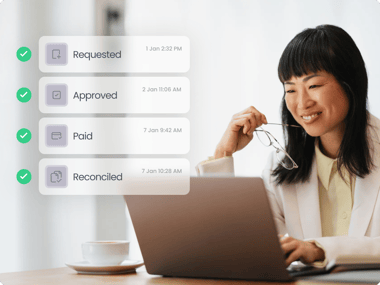
- An audit trail. There is a record of who approved each bill and when, so questions can be answered later.
None of these depend on the final UK standards. A client can put them in place now, and they will work the same way whether invoices arrive as PDFs this year or as e-invoices in 2029.
What a practice can do before and after the 28 October roadmap
Before the Budget
- Sort the client list by invoicing method. Note which clients use paper, spreadsheets, desktop software or cloud software, and which are VAT registered.
- Ask your software providers about Peppol. Find out whether the packages your clients use will connect to the network, and what it will cost.
- Brief your own team. Staff who speak to clients should be able to explain the difference between a PDF and an e-invoice in one or two sentences.
- Decide how you will charge for e-invoicing work. Where e-invoicing is already in place in Europe, accountants spent much of the rollout helping clients choose software and fix early mistakes. Decide whether that is part of an existing fee or separate advisory work.
After the Budget
- Read the roadmap for dates by business size. Belgium brought every business in on the same day. Check whether the UK does the same or phases businesses in by size, and which clients fall into the first group.
- Look for transitional relief or support. Note any tolerance period, penalty regime or tax relief, and what a business has to do to qualify. In Belgium, the tolerance period only applied to businesses that could show they had started.
- Write to affected clients. A short, plain explanation with a recommended next step will be more useful than a long technical briefing.
- Start the approval controls conversation. Use the e-invoicing news as the reason to review how each client approves bills before paying them.
Where ApprovalMax fits for practices and their clients
ApprovalMax does not send or receive e-invoices, and clients will not need it to meet the 2029 rules. That job belongs to their accounting software and its Peppol connection.
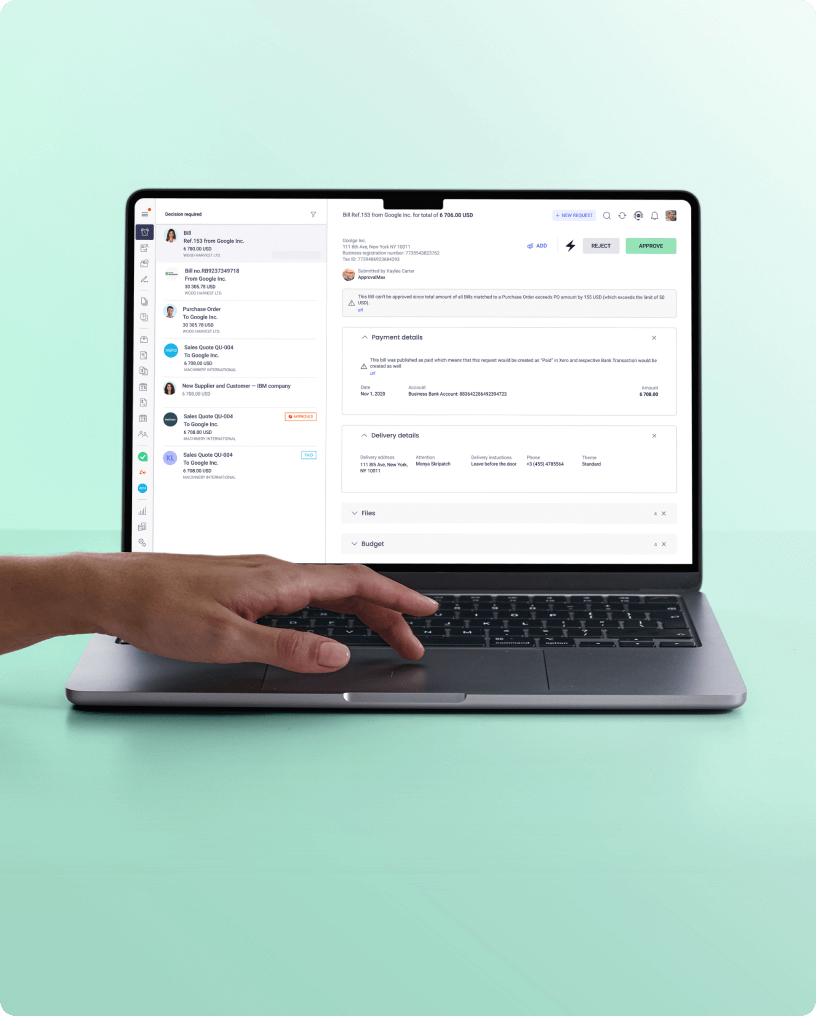
ApprovalMax covers the approval controls described above. It works with Xero, QuickBooks Online and NetSuite, and replaces approvals by email or on paper with set workflows. Bills, purchase orders and expenses go to the right approvers according to the client's rules, duties can be separated between different people, and every decision is recorded before payment. It is used by more than 20,000 businesses and accounting firms.
For a practice, that gives a practical answer to the Belgian problem of approvals that relied on printing or forwarding invoices. Setting up a structured approval process for a client now means that when bills start arriving as e-invoices, the checks are already in place and nothing has to be rebuilt in a hurry. See how ApprovalMax works with accounting partners.
UK e-invoicing FAQs for accountants
When does e-invoicing become mandatory in the UK?
E-invoicing becomes mandatory for all VAT invoices between UK businesses, and from businesses to public bodies, on 1 April 2029. The government confirmed this at the Budget in November 2025 and is due to publish an implementation roadmap at the Budget on 28 October 2026.
What is Peppol e-invoicing?
Peppol e-invoicing means sending invoices as structured data through the Peppol network, an international system that lets different accounting software exchange invoices. The UK confirmed Peppol as its core e-invoicing network in June 2026. Belgium has used the same network for mandatory e-invoicing since January 2026.
How does a business get a Peppol ID?
A Peppol ID is the identifier other businesses use to send e-invoices to the right place. In most Peppol countries, a business gets one through its access point provider, often its accounting software, when it switches on e-invoicing. The UK has not yet confirmed which identifier it will use.
Do accountants need to become a Peppol access point?
No. Access points are certified providers, usually software companies. Accountants support clients by helping them choose software that connects to Peppol, setting it up correctly and reviewing the processes around it.
Does e-invoicing apply to businesses that are not VAT registered?
The UK mandate covers VAT invoices, so businesses below the VAT threshold are not directly required to send e-invoices. They may still be asked to by larger customers that want all their suppliers on e-invoicing.
Does e-invoicing replace Making Tax Digital?
No. Making Tax Digital covers how businesses keep records and report to HMRC. E-invoicing covers how invoices pass between businesses. Both require digital records, so clients can often meet both with the same software.
Which accounts payable controls should clients have before 2029?
The most useful controls are an invoice approval workflow with named approvers, checks against purchase orders and budgets, segregation of duties between entering, approving and paying bills, and an audit trail of who approved what. These work whether invoices arrive as PDFs or e-invoices.
Is there any government support for the cost of e-invoicing in the UK?
Not yet. Belgium gave small businesses a 120% tax deduction on e-invoicing software. The UK has not announced anything similar, and practices should check the 28 October roadmap for any support or transitional relief.
Join the ICAEW webinar on preparing clients for e-invoicing
ApprovalMax and Azets are running a free webinar with ICAEW on Wednesday 14 October 2026, 12:00 to 13:00 BST, on Zoom. It is aimed at practices advising clients. Lee Beaumont, UK Head of Outsourcing at Azets, and Rafaella Torres, Corporate Financial Controller at ApprovalMax, will cover the questions clients are likely to ask and the approval controls practices should be discussing with them now. It counts for up to one hour of verifiable CPD, and ICAEW members and non-members can both attend.
Register for the webinar on the ICAEW website
Sources
Free trial
See how ApprovalMax enforces approval controls automatically
No credit card required. Works with Xero, QuickBooks Online and NetSuite.
Start free trialBook a demo







 Ask Perplexity