We recently ran a webinar on getting ready for e-invoicing in the UK, and were inundated with questions from business owners and finance teams, and from the accountants who support them. Most were sharp, practical questions from people who want to get this right for their own business, and a few were understandably worried.
The session with Azets, promoted by ICAEW, focused on how finance teams can get ready, and you can watch the full webinar on demand. It covers what is changing, what other countries learned, and what to do before 2029.
First, the essentials. E-invoicing becomes mandatory for UK VAT invoices from April 2029. Businesses will send and receive invoices as structured data over a network called Peppol, using the accounting software they already have. We’ll keep this post up to date as new rules are published.
Here’s what you asked, and here are the answers.
UK e-invoicing: key facts
- Start date: April 2029, for VAT invoices.
- Who is in scope: business-to-business and business-to-government VAT invoices. Sales to consumers are not included.
- The network: Peppol. It is a network that lets different accounting systems swap invoice data using shared rules. It is not a government portal or a piece of software.
- The model: "decentralised four-corner". The four corners are the supplier, the supplier's software provider, the customer's software provider and the customer. Businesses keep their own software.
- HMRC reporting: real-time reporting to HMRC is not part of the 2029 mandate. It may be added in a later phase.
- What counts as an e-invoice: structured data sent between systems. A PDF, a scan or an emailed attachment is not an e-invoice.
- What is still open: phasing by business size, exclusions, the exact data format, penalties and any grace period.
- Next update: the Budget on 28 October 2026 is expected to set out a roadmap, but not every detail.
Who is in scope for UK e-invoicing?
Scope was the biggest worry on the day. In a live poll, 43% of attendees said the question they most wanted answered was whether the start will be phased by business size. Another 37% wanted to know if there will be a free or low-cost route for small businesses.
43%
of webinar attendees most wanted to know if the start will be phased by business size
Another 37% wanted to know if there will be a free or low-cost route for small businesses. Live poll at the ApprovalMax and Azets webinar, 14 October 2026.
Is it only VAT-registered businesses? What about sole traders and partnerships?
What is confirmed is that VAT invoices are in scope, for business-to-business and business-to-government sales. Government guidance so far describes the mandate as a requirement for VAT-registered businesses. A sole trader or partnership that is VAT registered and issues VAT invoices should expect to be included, whatever its trading name. Nothing published so far says a Unique Taxpayer Reference (UTR) will be used to identify businesses.
Does it include sales to businesses that are not VAT registered?
This has not been confirmed. Under current rules, a business does not have to issue a VAT invoice to a customer who is not VAT registered. Because the mandate covers VAT invoices, sales to these customers may fall outside it, but the government has not said so. Expect the Budget roadmap or later guidance to cover this.
What about businesses that invoice individuals, such as a music teacher billing parents?
Sales to consumers are outside the current plan. A business that only invoices private individuals is not expected to be in the first phase.
My client is VAT exempt but supplies local government. Are they in scope?
This is not known yet. Under current rules, an invoice for an exempt supply is not a VAT invoice, and the mandate is written around VAT invoices. That suggests a business making only exempt supplies may fall outside it, but the government has not confirmed this. Expect exempt businesses and other special cases to be dealt with separately, possibly in a later phase.
Will the start be phased by business size?
The government has not confirmed this. Germany and France both phased their rollouts, and the UK is watching those programmes closely. Some commentators expect larger businesses to start first, but there is no official date for any phase. The Budget roadmap should make this clearer.
We are UK-based but have an entity in France. Which rules apply?
The French entity must follow French rules on French timescales. The UK mandate does not change that. If you trade in or with other EU countries, the advice is to check your obligations there now, because some of them already apply. Peppol is designed for cross-border trade, so UK and EU systems should be able to exchange invoices once both are live.
We are in a VAT group of 40 companies with one VAT number. How will that work?
The rules for VAT groups have not been published. The advice is to treat it as you treat VAT today. Invoices are likely to be checked against both the company registration number and the VAT number, which should allow group members to be told apart. Expect more guidance on this.
Will e-invoicing affect retailers and hotels?
Sales to consumers are outside the current plan, so most retail sales will not be affected. Where a retailer or a hotel sells to business customers and issues them VAT invoices, those invoices are likely to be in scope. A business with a mix of customers should expect to handle the two kinds of sale differently.
How will a business decide whether a sale is to a business or a consumer?
The rules for this have not been published. In other countries the deciding factor is usually the customer: if the customer is a registered business with a network address, the invoice goes over the network. Labelling a business sale as a consumer sale to avoid e-invoicing would be an incorrect invoice, as it would be today. Expect HMRC to set out how this will be checked.
What about invoices that are outside the scope of UK VAT?
Probably not, but this is not confirmed. The mandate applies to VAT invoices. An invoice for a supply outside the scope of UK VAT carries no UK VAT, so under current rules it is not a VAT invoice. The government has not yet said whether these invoices will be brought in. The roadmap is expected to list exclusions.
Does it apply to businesses on the VAT Flat Rate Scheme?
Expect so, for the invoices you issue to VAT-registered customers. Businesses on the Flat Rate Scheme must still issue VAT invoices to VAT-registered customers, charging the normal rate of VAT on each supply. The flat rate only applies when you work out what you pay HMRC. The government has said all VAT invoices will be e-invoices from 2029, though smaller businesses may start later if the rollout is phased.
How will e-invoicing work day to day?
The second group of questions was about what happens once an invoice arrives as data, and what happens when something is wrong with it.
How will an e-invoice reach the right customer?
Each business on Peppol has a network address, called a Peppol ID, held in a shared directory. The supplier's software looks up the customer's ID and sends the invoice to the customer's software provider. In other countries the ID is usually based on a VAT number or company registration number. The UK has not yet said which identifier it will use, so it is not yet confirmed whether the customer's VAT number must appear on the invoice for it to be delivered.
Your suppliers will need your Peppol ID, or the identifier it is based on, so their software can find you. They will also still need the details they need today, such as your legal name and address. The exact list will depend on the UK rules.
Will HMRC be able to see our invoice data?
Not under the first phase as currently planned. In the four-corner model, invoices pass between the supplier's and the customer's software providers over Peppol. Real-time reporting to HMRC is not part of the 2029 mandate. A later phase could add reporting to HMRC, so it is sensible to keep your data clean as if HMRC will see it eventually.
What happens if an invoice has the wrong details?
The expectation is that many errors will be caught when the invoice is first checked by the software, for example a VAT number that does not match the supplier record. Those invoices would not get into your system. Anything that passes that check but is still wrong will need to be picked up by your accounts payable team, the people who check and pay supplier bills.
What if we don't accept an invoice, for example if goods were not delivered?
The UK process has not been published. In countries already using e-invoicing, the customer first confirms the invoice has arrived. They then have a set number of days to approve or reject it. A rejected invoice goes back to the supplier, who sorts it out with the customer and sends a corrected one. The advice is to make sure someone is responsible for doing this on time, so invoices are not rejected or left unanswered by default.
Will accounts payable teams end up working through a list of rejected invoices?
Probably, but this is not new. Finance teams already query and send back wrong invoices. What changes is the channel: disputes may be handled through the software rather than by email.
Will approval become the new bottleneck?
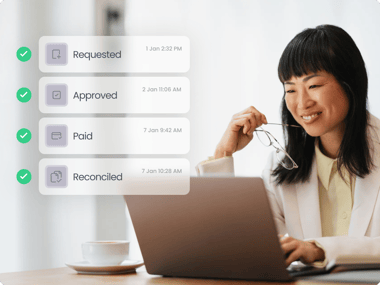
It can. If invoices arrive faster but approvals still rely on email, spreadsheets and chasing people, the delay moves to the approval step. The advice is to map your approval process now. Decide who approves each type of spend and who covers when they are away. Make sure each decision is recorded. That way routine invoices move through and your team can spend its time on the exceptions.
Will we still need to check VAT recovery and tax codes ourselves?
Yes. E-invoicing standardises how invoice data arrives. It does not decide how much VAT you can reclaim where that depends on judgement. Businesses that are partly VAT exempt will need to watch this closely. Supplier set-up forms will matter more, because you will need accurate details for each supplier, such as their VAT status or whether they are a registered charity.
Can we still change how an e-invoice is posted, for example for entertaining costs?
Yes, you should be able to. E-invoicing changes how the invoice arrives. It does not take away your decision on how to code it or how much VAT to reclaim. If a VAT-registered supplier charges VAT on business entertaining, you still post it so that the VAT is not reclaimed. How easy this is will depend on your accounting software and your approval rules.
Will Peppol bring in a standard chart of accounts?
There is no sign of this. Peppol sets a standard format for invoice data, such as supplier, amounts and VAT. It does not set how you organise your own ledger, and no plans for a standard chart of accounts have been announced.
How will self-billing work?
The UK has not published its approach yet. Self-billing, where the customer raises the invoice on the supplier's behalf, is common in construction, recruitment, agriculture and logistics. Peppol already has a self-billing format used in other countries, so it can be done on the network. Existing self-billing agreements and HMRC's self-billing rules still apply until new guidance says otherwise.
What happens if an invoice is accepted but not paid?
E-invoicing covers how invoices are sent and received. It does not change how or when they are paid. If an accepted invoice is not paid, the supplier chases it in the usual way, and late payment rules and VAT bad debt relief work as they do today. The government does hope that faster, cleaner invoices will reduce late payment over time.
What about invoices paid by standing order or direct debit?
The payment method does not change. If you pay a supplier by direct debit, the invoice would still arrive by e-invoice and still need to be checked and recorded. It is worth agreeing who checks these invoices, as they are easy to overlook when payment happens automatically.
Does e-invoicing change who is responsible for data accuracy or VAT adjustments?
No. Nothing announced so far changes the current rules. The business is still responsible for the accuracy of its VAT records. Errors are corrected as they are today: on your next VAT return if the net error is £10,000 or less, or up to £50,000 if that is under 1% of your sales, and reported separately to HMRC above that. You can correct errors from the last four years. HMRC will not receive invoice data in 2029, so there is no new reporting deadline. Real-time reporting could be added later and the timing rules might change then, so it is worth fixing slow approval of reissued invoices now.
What will e-invoicing cost, and what software will we need?
The last group of questions was about money, systems and whether the network is safe.
How much will e-invoicing cost?
No one can give a figure yet. The expectation is that most of the cost will sit in accounting software subscriptions, as providers build Peppol support into their products. Whether that means a price rise or is included in existing plans is up to each provider. The Budget may say more about support for small businesses.
Is the bigger cost cleaning up data rather than buying software?
For many small firms, yes. Supplier and customer lists are often out of date, and e-invoicing is likely to need more data for each supplier than you hold today. The advice is to budget time for this clean-up and for fixing approval steps, not just for software. One open question is whether old invoices will need cleaning up at all. In at least one other country, only invoices received after go-live appeared in the new system, so the UK may draw a line at the start date.
Do we just keep our current software and make sure it uses Peppol?
For most businesses, yes. Businesses do not all need to move to the same software. A supplier using Xero and a customer using SAP can still exchange e-invoices, as long as both providers support Peppol. The advice is to ask your software provider now how and when they will support it, and how invoices will flow into your approval process.
Should accountants advise clients on which systems to use?
There is a clear role for accountants and bookkeepers here, especially for small clients without in-house finance staff. But advisers are learning at the same time as their clients. Clear guidance from the government will matter, and so will the help software providers give. Our guide to UK e-invoicing for accountants covers what to discuss with clients.
Will VAT filing software that links to spreadsheets become redundant?
Not straight away. Over time it is likely, as the government moves towards more digital and real-time tax reporting. If you rely on spreadsheets and a bridging tool for VAT returns today, it is worth planning a move to accounting software before 2029.
How do we know our data is safe on Peppol?
Peppol is already well established in the UK. NHS suppliers and many public bodies have used it since 2019. The open question is how it will cope with the volume once every VAT-registered business that issues VAT invoices joins. Moving invoices off email should also cut invoice fraud, because there is no emailed PDF for a fraudster to intercept and change bank details on.
Is invoice data encrypted as it passes between businesses?
Yes. Peppol access points, the certified providers that connect businesses to the network, send invoices to each other using a secure messaging standard called AS4. Messages are encrypted and digitally signed in transit, so they cannot be read or changed on the way. Your own software provider is responsible for keeping the data secure once it arrives.
Is this just red tape, or are there real benefits?
It will feel like red tape at first. The benefits come later: faster processing, fewer keying errors, better audit trails and, the government hopes, fewer late payments. The government's other aim is to close the VAT gap, the difference between VAT owed and VAT collected. HMRC's latest estimate puts it at 6.5%, or £11.9 billion, for 2024 to 2025.
£11.9bn
UK VAT gap for 2024 to 2025
That is 6.5% of the VAT owed, according to HMRC's revised estimate published in March 2026. Closing this gap is one of the government's aims for e-invoicing.
What UK legislation allows this to be brought in?
The rules that make e-invoicing compulsory have not been published yet. Current VAT law already allows electronic invoices, as long as they can be shown to be genuine, unaltered and readable, and the customer agrees to receive them. The government confirmed mandatory e-invoicing for all VAT invoices from 2029 in its consultation response at the November 2025 Budget, and confirmed Peppol in June 2026. The detailed roadmap is due in the Budget on 28 October 2026.
How much is the government telling businesses about this?
Detailed guidance has not been published yet, and many accountants are already stretched by Making Tax Digital. HMRC and the Department for Business and Trade have run a stakeholder group with accountants, business groups and software providers, and they hold webinars on request (contact einvoicingengagement@hmrc.gov.uk). More detailed guidance is expected after the Budget. With the start in April 2029, the advice is to plan the work in small steps rather than tackle it all at once.
Will there be more updates as the rules are confirmed?
Yes. All the questions we could not answer on the day have gone to ICAEW's tax faculty, which plans further content and webinars. We will also update this post when the Budget roadmap is published.
How to prepare for e-invoicing before April 2029
You do not need to understand Peppol in technical detail. Most of the technical work is likely to sit with your accounting software provider. The work that falls to your team is about data and process, and it takes longer than most people expect. More complex businesses should allow 12 to 18 months to get data ready, connect systems and test.
- Clean your supplier and customer records. Check VAT numbers, company registration numbers and contact details. Remove suppliers you no longer use.
- Write down your approval process. Record who approves which invoices, who covers for them, and how long approval should take.
- Make sure you have an audit trail. You should be able to show who approved each invoice and why, quickly, if you are asked.
- List your manual workarounds. Note where invoices arrive by email, get re-keyed or are approved outside your system.
- Ask your software providers about Peppol. Find out when they will support it and how invoices will reach your approval process.
- Check your EU obligations. If you trade with or have entities in other countries, some e-invoicing rules may already apply to you.
- Put it in the budget. Include time for data clean-up and process changes, not just software.
Free checklist: getting ready for e-invoicing in the UK
Start with this quick readiness check. Answer yes or no. Every "no" is a place to start.
- Do you know how many invoices you receive each month, and in what format?
- Do you know which of your suppliers already use e-invoicing?
- Has your accounting software provider told you their e-invoicing plans?
- Is one person responsible for e-invoicing preparation?
- Are your supplier names, VAT numbers and bank details up to date?
- Is every invoice approved by the right person before it's paid?
- Do larger invoices automatically need a second approver?
- Could you show an auditor who approved any invoice, and when?
The full checklist has 52 actions, each with a suggested owner, split into stages: now, when the roadmap is published, getting data and systems ready, the final months before April 2029, and after go-live. There is also a section for accountants and advisers preparing their clients.
Download the UK e-invoicing checklist (PDF)
ApprovalMax helps finance teams with steps 2 and 3. It sends each bill to the right approvers, with substitutes for when they are away, and records every decision in an audit trail. It works with Xero, QuickBooks Online and NetSuite.
Watch the webinar on demand
The full session goes further into how other countries handled the switch and what the UK can learn from them. It also covers why the government is making the change and what to look for in the Budget.
Watch "How to get ready for e-invoicing in the UK" on demand
UK e-invoicing FAQ
When does e-invoicing become mandatory in the UK?
From April 2029, for VAT invoices between businesses and from businesses to government. The government has not yet confirmed whether the start will be phased by business size. A roadmap is expected in the Budget on 28 October 2026.
What is an e-invoice?
An e-invoice is an invoice sent as structured data from one system to another, so the receiving system can read and process it automatically. A PDF, a Word document, a scanned paper invoice or an image attached to an email is not an e-invoice.
What is Peppol?
Peppol is the network the UK has chosen for e-invoicing. It lets different accounting systems exchange invoice data using shared rules, much as the banking network lets money move between different banks. It is not accounting software and it is not a government portal. NHS suppliers have used it since 2019.
Do I need to change my accounting software for e-invoicing?
Usually not. You can keep your current software as long as your provider supports Peppol. Ask your provider how and when they plan to add it.
Does e-invoicing apply to sales to consumers?
No. The current plan covers business-to-business and business-to-government VAT invoices only.
Do businesses that are not VAT registered need to use e-invoicing?
This has not been confirmed. The mandate covers VAT invoices, and government guidance so far describes it as a requirement for VAT-registered businesses. Whether invoices sent to customers below the VAT threshold must go over Peppol is expected to be set out in the roadmap.
Will HMRC see my invoices in real time from 2029?
No. Real-time reporting to HMRC is not part of the 2029 mandate. Invoices pass between businesses' software providers over Peppol. Reporting to HMRC may be added in a later phase.
What should finance teams do now to prepare for e-invoicing?
Clean up supplier and customer records, document your approval process, and make sure you can show an audit trail for every invoice. Ask your software provider about Peppol support. Larger or more complex businesses should allow 12 to 18 months to prepare.
Free trial
See how ApprovalMax enforces approval controls automatically
No credit card required. Works with Xero, QuickBooks Online and NetSuite.
Start free trialBook a demo






 Ask Perplexity